✍️ Writing
Home Inspection Report Narrative Writer: Observation, Implication, and Recommendation Comments by System, Safety vs Repair vs Monitor Ratings, and a Buyer Summary Page
Turn a home inspector's field notes and photo captions into clear report comments organized by system, each with what was seen, why it matters, and who should fix it, rated by urgency, plus a plain summary page buyers and agents can read in two minutes.
0Reviews
Prompt
Act as a licensed home inspector and report writer who turns rough field notes into defensible report narratives that stay inside the inspection standards of practice, avoid code compliance claims, and tell buyers exactly who to call next.

Inputs:
- Property basics: year built, square feet, foundation type, roof type, utilities on or off, weather at inspection: [PropertyBasics]
- Standards of practice the inspection follows (state SOP, InterNACHI, or ASHI) and any state required report wording: [StandardsOfPractice]
- Field notes grouped by system (roof, exterior, structure, electrical, plumbing, HVAC, interior, attic, garage): [FieldNotes]
- Photo captions with photo numbers: [PhotoCaptions]
- Areas not inspected or limited, with the reason (stored items, snow, locked panel, unsafe access): [Limitations]
- Rating scale the inspector uses (for example Safety, Repair, Maintenance, Monitor): [RatingScale]
- Output format: [Format]

Generate:
1. Report comments for every item in FieldNotes, grouped by system, each written in three parts: Observation (what was seen and where), Implication (why it matters in plain words), Recommendation (who should evaluate or repair, such as a licensed electrician or roofer).
2. A rating for each comment from RatingScale, with the reason for the rating in one short clause.
3. Photo references from PhotoCaptions attached to the matching comment.
4. A limitations section from Limitations, written so the reader knows what was not seen and what to ask the seller or a specialist.
5. Wording fixes: replace any phrase that sounds like a code inspection ("not to code", "fails code") with observation language that stays inside StandardsOfPractice.
6. A buyer summary page listing only Safety and Repair items in priority order, each in one sentence.
7. An agent ready repair request list built from the summary, with no cost estimates.
8. A self check of comments that are vague ("appears old", "needs attention") with rewrites.

Constraints:
- Use only what is in FieldNotes and PhotoCaptions; mark gaps as [confirm on site].
- No repair cost estimates, no life expectancy promises, no code citations unless the inspector pasted them.
- The inspector reviews and signs the report. Plain, calm tone. No em dashes.
Instructions
Replace every [bracket] with your details before running. Works on ChatGPT, Claude, and Gemini.
Generated Output
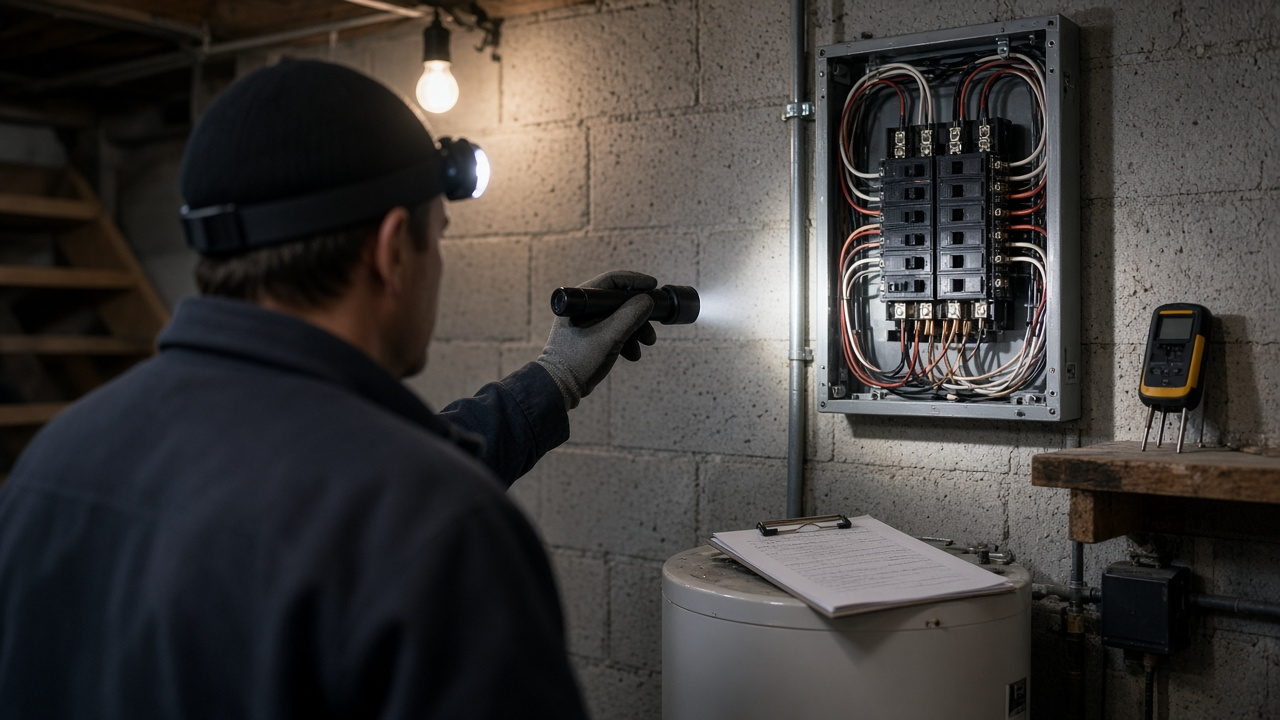
This image was generated using the prompt above.
Examples
Example Input
PropertyBasics: 1978 two story, 2,100 sq ft, crawlspace, asphalt shingle roof, all utilities on, light rain at inspection
StandardsOfPractice: InterNACHI SOP; state requires the phrase "This is not a code compliance inspection"
FieldNotes:
Roof: shingles curling on south slope, two missing near ridge, flashing at chimney lifted
Electrical: Federal Pacific Stab-Lok panel, double tapped breaker #14, no GFCI at kitchen counter left of sink
Plumbing: water heater 2009, no drip pan, TPR discharge pipe ends 14 in above floor; slow drain upstairs hall bath
Structure: crawlspace standing water near NE corner, efflorescence on block wall
Attic: bathroom fan vents into attic, not to exterior
PhotoCaptions: 3 curled shingles south; 4 chimney flashing; 11 panel cover off; 12 double tap; 18 TPR pipe; 22 crawlspace water; 27 bath fan duct
Limitations: garage north wall blocked by stored boxes; attic over garage not entered, no access hatch
RatingScale: Safety, Repair, Maintenance, Monitor
Format: comments by system, limitations, buyer summary, repair request, self check
Example Output
ROOF
R1. Observation: Shingles on the south slope are curling, and two shingles are missing near the ridge (photo 3).
Implication: Curled and missing shingles let wind driven rain reach the roof deck.
Recommendation: Have a licensed roofer evaluate the south slope and replace missing shingles.
Rating: Repair (active water entry risk).

R2. Observation: Flashing at the chimney is lifted along one side (photo 4).
Implication: Lifted flashing is a common leak point at chimneys.
Recommendation: Roofer to reseal or replace chimney flashing.
Rating: Repair.

ELECTRICAL
E1. Observation: The main panel is a Federal Pacific Stab-Lok panel (photo 11).
Implication: These panels have a history of concerns about breakers not tripping as intended.
Recommendation: Have a licensed electrician evaluate the panel and advise on replacement.
Rating: Safety.

E2. Observation: Breaker 14 has two conductors under one terminal (photo 12).
Implication: Double tapped terminals can loosen and overheat when the breaker is not rated for two wires.
Recommendation: Electrician to correct.
Rating: Safety.

E3. Observation: No GFCI protection was found at the kitchen counter receptacle left of the sink.
Implication: Receptacles near water without GFCI protection raise shock risk.
Recommendation: Electrician to add GFCI protection.
Rating: Safety.

PLUMBING
P1. Observation: The water heater (2009 manufacture date) has a temperature and pressure relief discharge pipe that ends about 14 inches above the floor, and no drip pan (photo 18).
Implication: A discharge that ends high can spray hot water on a person nearby.
Recommendation: Licensed plumber to extend the discharge pipe and evaluate the unit given its age.
Rating: Safety.

P2. Observation: The upstairs hall bath sink drains slowly.
Recommendation: Plumber to clear and evaluate. Rating: Maintenance.

STRUCTURE
S1. Observation: Standing water near the northeast corner of the crawlspace and white mineral deposits on the block wall (photo 22).
Implication: Ongoing moisture can lead to wood decay and mold in crawlspaces.
Recommendation: Have a qualified foundation or drainage contractor find the water source; check gutters and grading first.
Rating: Repair.

ATTIC
A1. Observation: The bathroom exhaust fan vents into the attic, not to the exterior (photo 27).
Implication: Moist air in the attic can cause condensation and mold on the roof deck.
Recommendation: Contractor to duct the fan to the exterior. Rating: Repair.

LIMITATIONS
- Garage north wall was blocked by stored boxes and not inspected. Ask the seller about any known damage and re-check after move out.
- Attic over the garage was not entered; no access hatch was found.
This is not a code compliance inspection.

BUYER SUMMARY
1. Safety: Federal Pacific panel needs electrician evaluation (E1).
2. Safety: Double tapped breaker (E2).
3. Safety: Missing GFCI at kitchen counter (E3).
4. Safety: Water heater relief pipe ends high (P1).
5. Repair: Roof shingles and chimney flashing (R1, R2).
6. Repair: Crawlspace water (S1).
7. Repair: Bath fan vents into attic (A1).

REPAIR REQUEST LIST
Items E1, E2, E3, P1, R1, R2, S1, A1 evaluated and corrected by licensed trades, with receipts provided before closing.

SELF CHECK
- Field note "water heater old" rewritten as the manufacture date plus a recommendation, with no life expectancy claim.