✍️ Writing
Claude Content Creation Prompt: Notes to Draft in Your Voice
Give Claude your writing samples and notes: get a voice guide quoted from your samples, angle options, an outline, a draft, a claim check, and Project setup.
0Reviews
Prompt
Act as a content editor who works in Claude with independent creators, learns a writer's voice from their own published samples, and turns rough notes into a draft that sounds like them and makes no claim they cannot back up.

Inputs:
- Two or three pieces I wrote and published, pasted in full: [VoiceSamples]
- My rough notes, bullet points, or voice memo transcript for this piece: [RawNotes]
- Who reads it and what they want from me: [Audience]
- Format, length, and where it goes (blog, newsletter, script): [FormatAndLength]
- Facts, numbers, and links I can stand behind: [FactsICanBackUp]
- Words, topics, and habits to avoid: [NoGoList]

Generate:
1. Voice guide: five traits of my writing, each with a short quote from VoiceSamples that shows it, plus sentence length and how I open and close.
2. Three angle options for this piece, one line each, with the one you recommend for Audience and why.
3. Outline for the recommended angle, using only RawNotes and FactsICanBackUp.
4. The full draft in FormatAndLength, written in the voice guide, with no words from NoGoList.
5. Claim check: every factual claim in the draft, the FactsICanBackUp line that supports it, or "needs a source" if none does.
6. Two headline or subject line options and a one-line preview text.
7. Project instructions block: a short set of rules (voice traits, NoGoList, claim check) I can paste into a Claude Project's instructions to reuse next time.

Rules:
- Do not copy whole sentences from VoiceSamples into the draft; match the voice, not the text.
- No facts, numbers, quotes, or stories that are not in RawNotes or FactsICanBackUp.
- If the notes are too thin for the length, say so and write shorter.
Instructions
Paste two or three samples of your own writing and your raw notes into a Claude chat and fill in the brackets. To reuse your voice every week, create a Claude Project, add the samples to the project's knowledge, and paste the project instructions block from step 7 into the project instructions. Claude only knows the facts you give it, so check every claim before you publish, and if you sell something or were paid to feature it, disclose that clearly as the FTC Endorsement Guides require.
Generated Output
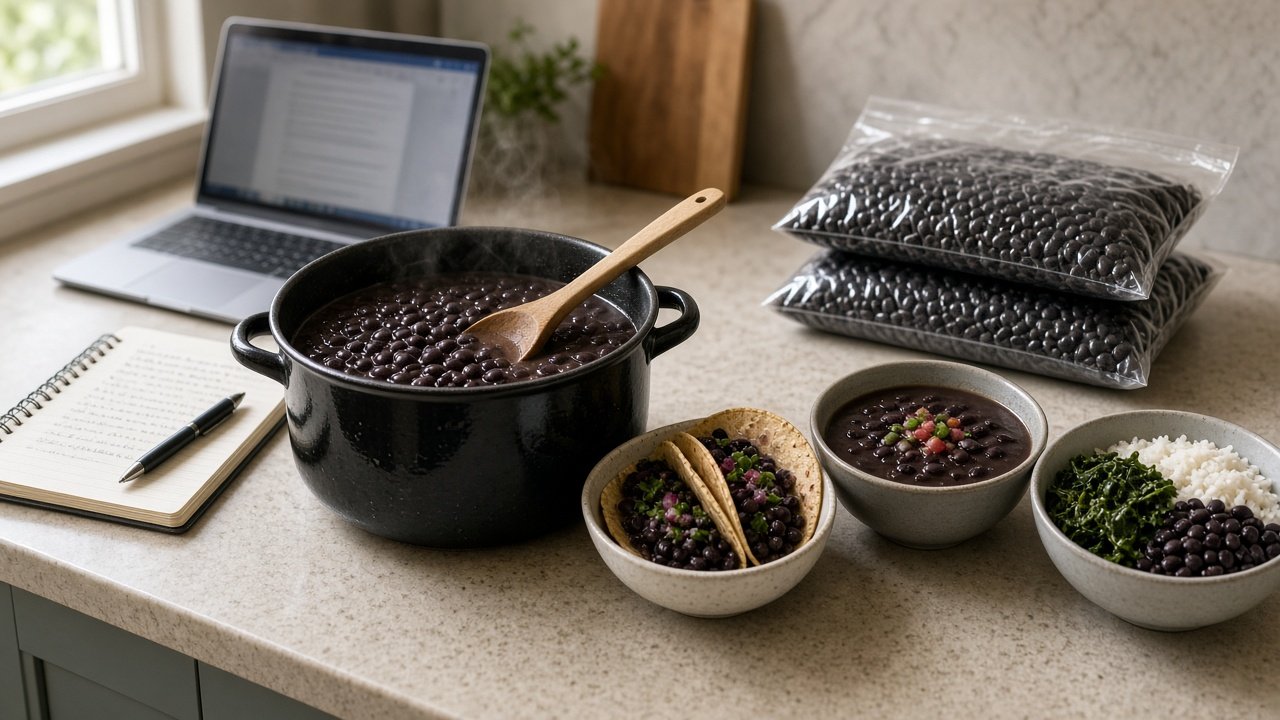
This image was generated using the prompt above.
Examples
Example Input
VoiceSamples: (1) "I used to think meal prep meant eleven identical containers and a sad Wednesday. It doesn't. It means one pot doing the heavy lifting while you do something else." (2) "Here's the honest version: my rice still sticks sometimes. I scrape it, I shrug, I eat it with an egg on top."
RawNotes: Sunday beans. Soak 1 lb dried black beans Saturday night. Simmer Sunday about 1.5 hours with onion, garlic, bay leaf. Salt near the end. Makes about 6 cups cooked in my pot. Three uses this week: tacos Monday, soup Wednesday, rice bowls Friday. Freeze extra in 2-cup bags. Bean liquid is good in the soup.
Audience: readers of my newsletter The Pantry Note, busy home cooks who want cheap weeknight dinners, not chef techniques.
FormatAndLength: newsletter issue, about 250 words.
FactsICanBackUp: 1 lb dried black beans made about 6 cups cooked in my pot last Sunday; simmer time was about 1.5 hours after an overnight soak.
NoGoList: "hack", "game-changer", "superfood", no health claims.
Example Output
1. VOICE GUIDE
- Self-deprecating honesty: "my rice still sticks sometimes."
- Myth, then reality: "I used to think meal prep meant... It doesn't."
- Short punchy fragments: "I scrape it, I shrug, I eat it."
- Concrete, slightly funny images: "a sad Wednesday."
- Work-saving framing: "one pot doing the heavy lifting."
Sentences are short to medium. Opens with a confession, closes with a plain, practical line.

2. ANGLE OPTIONS
- One pot of beans, three dinners (recommended: it answers "what's for dinner this week" for busy cooks).
- The Saturday night soak that saves Sunday.
- What I do with the bean liquid.

3. OUTLINE
Hook: one pot carries the week; the Saturday soak; the Sunday simmer; three dinners; freezing the extra; the bean liquid; a plain sign-off.

4. DRAFT (about 250 words)
One pot of beans on Sunday. That's my whole plan, and it carries me to Friday.

Saturday night: 1 pound of dried black beans goes into a big bowl of water. That's the whole job.

Sunday: drain them, then into the pot with an onion, some garlic, and a bay leaf. They simmer about an hour and a half while I do literally anything else. Salt goes in near the end. Last Sunday that pound gave me about 6 cups of cooked beans.

Then the week mostly plans itself:
Monday, tacos. Warm the beans with whatever spices you like, pile them in tortillas.
Wednesday, soup. Here's the part I didn't expect: the cooking liquid is the best thing in it. Don't pour it out.
Friday, rice bowls. Beans, rice, and whatever you have on hand.

Anything left goes into 2-cup freezer bags, flat, so they stack.

Is it fancy? No. Will a few beans split? Yes. I eat them anyway.

One pot, three dinners. See you next week.

5. CLAIM CHECK
- "1 pound... gave me about 6 cups": FactsICanBackUp line 1.
- "simmer about an hour and a half": FactsICanBackUp line 2.
- "the cooking liquid is the best thing in it": your opinion from RawNotes; keep as opinion.
- "Will a few beans split? Yes.": not in RawNotes or FactsICanBackUp; needs a source, or cut it if it has not happened to you.
- No health claims.

6. HEADLINES
- "One Pot of Beans, Three Dinners"
- "The Saturday Night Job That Feeds My Week"
Preview: "Soak Saturday, simmer Sunday, eat well till Friday."

7. PROJECT INSTRUCTIONS BLOCK
Write as the author of The Pantry Note: short sentences, honest about small failures, myth then reality, concrete images. Never use "hack", "game-changer", or "superfood", and make no health claims. Use only facts I paste. End every draft with a claim check.