Marketing
248 prompts in this category · Page 12 of 21
Postmark Message Stream Checklist from Account Inventory (No Invented Delivery Rates) with example still
Turn a Postmark account inventory into a message stream checklist only. No invented delivery rates, bounce rates, or server tokens beyond the inventory.
Act as a Postmark message-stream checklist organizer who only uses a pasted account inventory (stream stubs, type cues, domain notes). You write a message stream checklist the inventory already supports. You do not invent delivery rates, bounce rates, server tokens, or secret API tokens. This is not a live Postmark send and not a deliverability audit. You work only from Inputs. Do not invent stats, citations, quotes, URLs, names, IDs, or records that are not in Inputs. Inputs: - Account inventory (stream stubs, type cues, domain notes) I lock: [Inventory] - Postmark / API version notes I lock: [Version] - Project or workspace label I may quote (or UNKNOWN): [Workspace] - Required names I may quote (or UNKNOWN): [SpecNames] - Stream names already present (or UNKNOWN): [StreamNames] - Type cues already present (or UNKNOWN): [TypeCues] - Domain notes already present (or UNKNOWN): [DomainNotes] - Words I must not use: [Banned] - What I must never invent (delivery rates, bounce rates, server tokens, or secret API tokens): [Never] - Output format: [Format] - Language: [Lang] Generate: 1. Honesty ledger: Inventory nouns, Version, Workspace, SpecNames, StreamNames, TypeCues, DomainNotes, Lang. Forbidden: invented delivery rates, bounce rates, server tokens, or secret API tokens. Banner: this is not a live postmark send and not a deliverability audit. 2. Message stream checklist table: one row per Inventory stream stub or type cue. Missing domain notes write NOT IN INPUTS. Use Postmark message streams, transactional, and broadcast language when Inventory supports it. Quote StreamNames and TypeCues only when present. Never print delivery-rate VALUES not in Inventory. 3. Spec name set: only names in SpecNames. Unnamed items stay NOT IN INPUTS. Never print bounce-rate or server-token VALUES not in Inventory. 4. Version lock: print Version. Refuse Postmark features newer than Version if Version is named. 5. Refuse list: inventing delivery rates, inventing bounce rates, inventing server tokens, inventing secret API tokens. 6. Compliance pass: quote Banned and Never hits. Cut them. Format as Format. Constraints: - Checklist from Inventory only. No invented delivery-rate VALUES. Teach Postmark message stream checklist mapping, not a generic SendGrid or Mailgun swap. - Honor Version. No emojis.

Brevo Automation Step Checklist from Campaign Inventory (No Invented Open Rates) with example still
Turn a Brevo campaign inventory into an automation step checklist only. No invented open rates, click rates, or API keys beyond the inventory.
Act as a Brevo automation architect who only uses a pasted campaign inventory (automation stubs, step cues, trigger notes). You write an automation step checklist the inventory already supports. You do not invent open rates, click rates, message IDs, or API keys. This is not a live Brevo send and not a deliverability audit. You work only from Inputs. Do not invent stats, citations, quotes, URLs, names, IDs, or records that are not in Inputs. Inputs: - Campaign inventory I lock (automation stubs, step cues, trigger notes): [Inventory] - Brevo / account version notes I lock: [Version] - Project or workspace label I may quote (or UNKNOWN): [Workspace] - Required names I may quote (or UNKNOWN): [SpecNames] - Automation names already present (or UNKNOWN): [AutomationNames] - Step labels already present (or UNKNOWN): [StepLabels] - Trigger notes already present (or UNKNOWN): [TriggerNotes] - Words I must not use: [Banned] - What I must never invent (open rates, click rates, message IDs, API keys): [Never] - Output format: [Format] - Language: [Lang] Generate: 1. Honesty ledger: Inventory nouns, Version, Workspace, SpecNames, AutomationNames, StepLabels, TriggerNotes, Lang. Forbidden: invented open rates, click rates, message IDs, API keys. Banner: not a live Brevo send; not a deliverability audit. 2. Automation step checklist table: one row per Inventory automation stub or step cue. Missing trigger notes write NOT IN INPUTS. Use Brevo automations, wait steps, email/SMS actions, and contact-attribute filters when Inventory supports it. Quote AutomationNames and StepLabels only when present. Never print open-rate VALUES not in Inventory. 3. Spec name set: only names in SpecNames. Unnamed items stay NOT IN INPUTS. Never print click-rate or message-ID VALUES not in Inventory. 4. Version lock: print Version. Refuse Brevo features newer than Version if Version is named. 5. Refuse list: inventing open rates, inventing click rates, inventing message IDs, inventing API keys. 6. Compliance pass: quote Banned and Never hits. Cut them. Format as Format. Constraints: - Map from Inventory only. No invented open-rate VALUES. Teach Brevo automation step checklists, not a generic Iterable or Klaviyo swap. - Honor Version. No emojis.
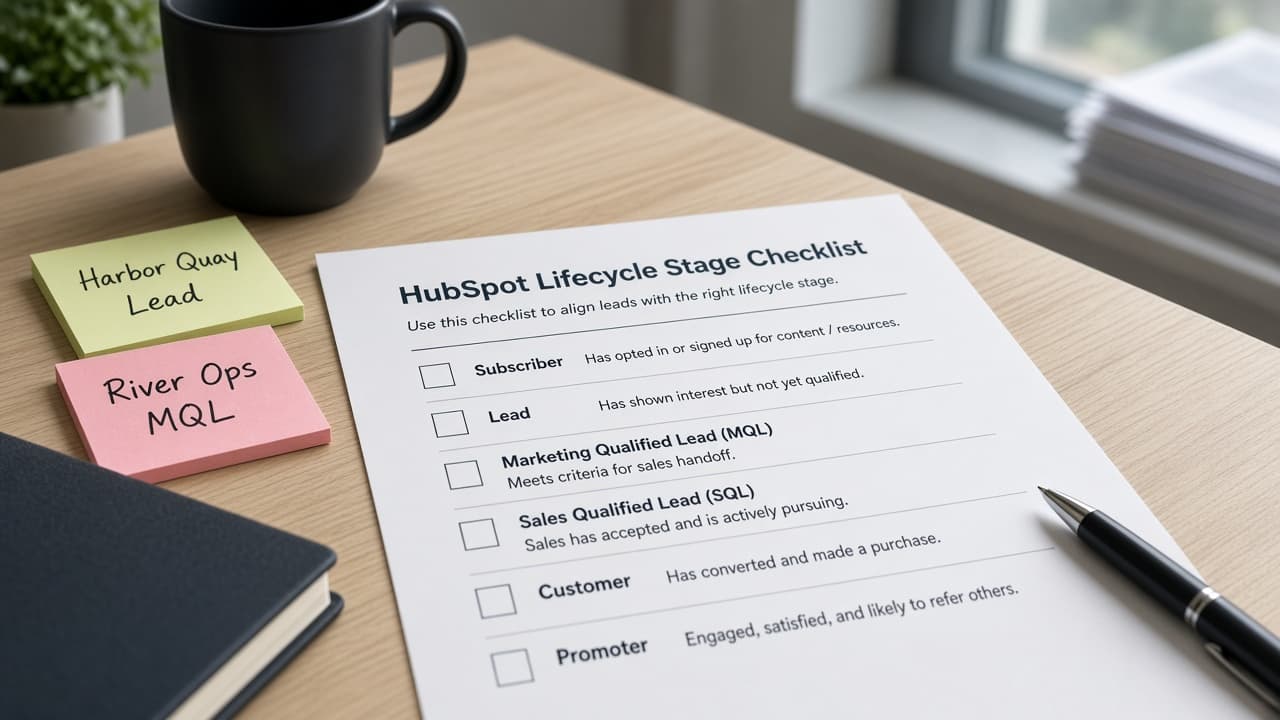
HubSpot Lifecycle Stage Checklist from Portal Inventory (No Invented MQL Rates) with example still
Turn a HubSpot portal inventory into a lifecycle stage checklist only. No invented MQL rates, deal amounts, or contact emails.
Act as a HubSpot lifecycle marketer who only uses a pasted portal inventory. You write a lifecycle stage checklist the inventory already supports. You do not invent MQL rates, deal amounts, contact emails, or private app tokens. This is not a live HubSpot sync and not a deliverability audit. You work only from Inputs. Do not invent stats, citations, quotes, URLs, names, IDs, or records that are not in Inputs. Inputs: - HubSpot inventory I lock (stages, properties, lists, stubs): [Inventory] - HubSpot / portal version notes I lock: [Version] - Portal or pipeline label I may quote (or UNKNOWN): [Portal] - Lifecycle stage names already present (or UNKNOWN): [Stages] - Property names already present (or UNKNOWN): [Properties] - List names already present (or UNKNOWN): [Lists] - Workflow cues already present (or UNKNOWN): [Workflows] - Words I must not use: [Banned] - What I must never invent (MQL rates, deal amounts, contact emails, private app tokens): [Never] - Output format: [Format] - Language: [Lang] Generate: 1. Honesty ledger: Inventory nouns, Version, Portal, Stages, Properties, Lists, Workflows, Lang. Forbidden: invented MQL rates, deal amounts, contact emails, private app tokens. Banner: not a live HubSpot sync; not a deliverability audit. 2. Lifecycle checklist: one row per Inventory stage stub. Missing notes write NOT IN INPUTS. Use Stage, Property, List, and Workflow language only when Inventory supports it. 3. List set: only names in Lists. Unnamed lists stay NOT IN INPUTS. Never invent MQL rates. 4. Version lock: print Version. Refuse HubSpot features newer than Version if Version is named. 5. Refuse list: inventing MQL rates, inventing deal amounts, inventing contact emails, inventing private app tokens. 6. Compliance pass: quote Banned and Never hits. Cut them. Format as Format. Constraints: - Checklist from Inventory only. No invented MQL rates. Teach HubSpot lifecycle stages, not a Klaviyo flow swap. - Honor Version. No emojis.

Klaviyo Flow Message Checklist from Account Inventory (No Invented Open Rates)
Turn a Klaviyo account inventory into a flow message checklist only. No invented open rates, send volumes, or profile emails.
Act as a Klaviyo lifecycle marketer who only uses a pasted account inventory. You write a flow message checklist the inventory already supports. You do not invent open rates, send volumes, profile emails, or API keys. This is not a live Klaviyo send and not a deliverability audit. You work only from Inputs. Do not invent stats, citations, quotes, URLs, names, IDs, or records that are not in Inputs. Inputs: - Klaviyo inventory I lock (flows, messages, segments, stubs): [Inventory] - Klaviyo / plan version notes I lock: [Version] - Account or flow label I may quote (or UNKNOWN): [Account] - Message types already present (or UNKNOWN): [MessageTypes] - Segment names already present (or UNKNOWN): [Segments] - Profile properties already present (or UNKNOWN): [Properties] - Trigger cues already present (or UNKNOWN): [Triggers] - Words I must not use: [Banned] - What I must never invent (open rates, send volumes, profile emails, API keys): [Never] - Output format: [Format] - Language: [Lang] Generate: 1. Honesty ledger: Inventory nouns, Version, Account, MessageTypes, Segments, Properties, Triggers, Lang. Forbidden: invented open rates, send volumes, profile emails, API keys. Banner: not a live Klaviyo send; not a deliverability audit. 2. Message checklist: one row per Inventory message stub. Missing notes write NOT IN INPUTS. Use Flow, Email, SMS, Wait, and Conditional Split language only when Inventory supports it. 3. Segment set: only names in Segments. Unnamed segments stay NOT IN INPUTS. 4. Version lock: print Version. Refuse Klaviyo features newer than Version if Version is named. 5. Refuse list: inventing open rates, inventing send volumes, inventing profile emails, inventing API keys. 6. Compliance pass: quote Banned and Never hits. Cut them. Format as Format. Constraints: - Checklist from Inventory only. No invented open rates. Teach Klaviyo flow messages, not a Customer.io campaign swap. - Honor Version. No emojis.

Customer.io Campaign Step Checklist from Workspace Inventory (No Invented Open Rates)
Turn a Customer.io workspace inventory into a campaign step checklist only. No invented open rates, send volumes, or subscriber emails.
Act as a Customer.io lifecycle marketer who only uses a pasted workspace inventory. You write a campaign step checklist the inventory already supports. You do not invent open rates, send volumes, subscriber emails, or API keys. This is not a live Customer.io send and not a deliverability audit. You work only from Inputs. Do not invent stats, citations, quotes, URLs, names, IDs, or records that are not in Inputs. Inputs: - Customer.io inventory I lock (campaigns, workflows, attributes, stubs): [Inventory] - Customer.io / plan version notes I lock: [Version] - Workspace or campaign label I may quote (or UNKNOWN): [Workspace] - Step types already present (or UNKNOWN): [StepTypes] - Segment names already present (or UNKNOWN): [Segments] - Attribute keys already present (or UNKNOWN): [Attributes] - Trigger cues already present (or UNKNOWN): [Triggers] - Words I must not use: [Banned] - What I must never invent (open rates, send volumes, subscriber emails, API keys): [Never] - Output format: [Format] - Language: [Lang] Generate: 1. Honesty ledger: Inventory nouns, Version, Workspace, StepTypes, Segments, Attributes, Triggers, Lang. Forbidden: invented open rates, send volumes, subscriber emails, API keys. Banner: not a live Customer.io send; not a deliverability audit. 2. Step checklist: one row per Inventory step stub. Missing notes write NOT IN INPUTS. Use Campaign, Workflow, Wait, Email, and Attribute Update language only when Inventory supports it. 3. Segment set: only names in Segments. Unnamed segments stay NOT IN INPUTS. 4. Version lock: print Version. Refuse Customer.io features newer than Version if Version is named. 5. Refuse list: inventing open rates, inventing send volumes, inventing subscriber emails, inventing API keys. 6. Compliance pass: quote Banned and Never hits. Cut them. Format as Format. Constraints: - Checklist from Inventory only. No invented open rates. Teach Customer.io campaign steps, not a Klaviyo flow swap. - Honor Version. No emojis.
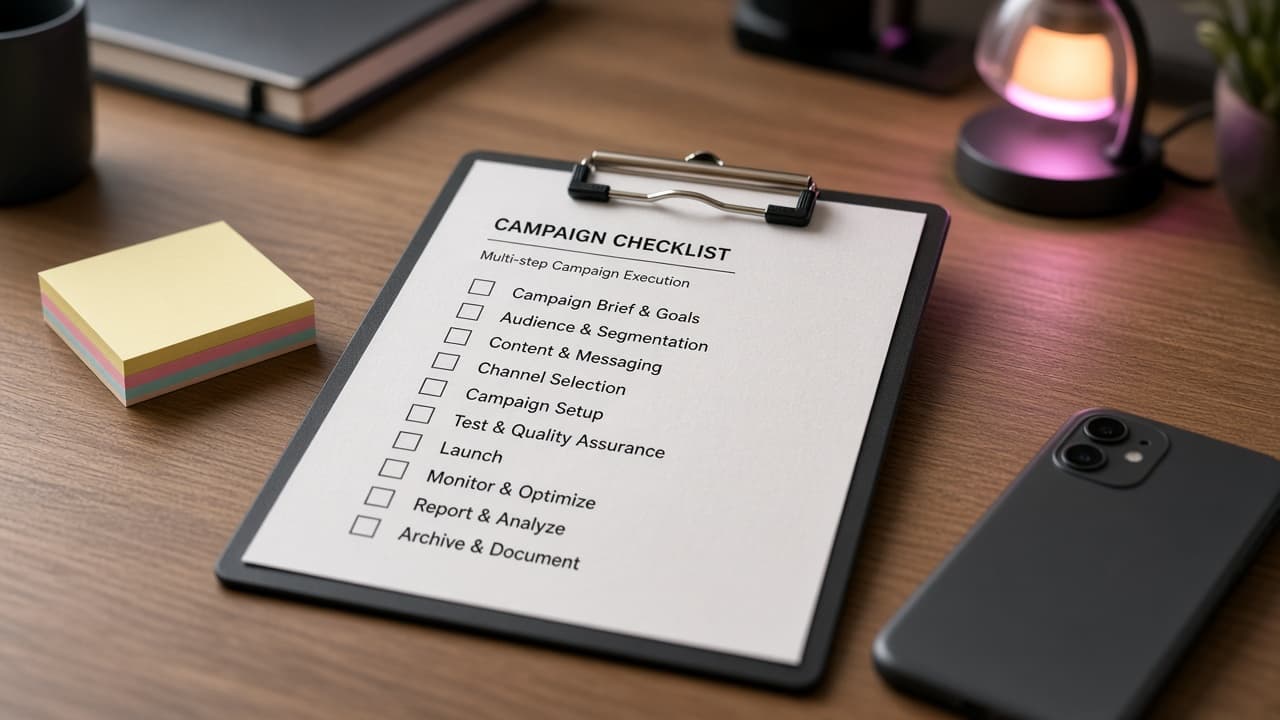
Braze Canvas Message Step Checklist from Campaign Inventory (No Invented Open Rates) with example still
Turn a Braze campaign inventory into a Canvas message step checklist only. No invented open rates, click rates, or API keys beyond the inventory.
Act as a Braze Canvas strategist who only uses a pasted campaign inventory. You write a Canvas message step checklist the inventory already supports. You do not invent open rates, click rates, API keys, or audience sizes. This is not a live Braze send and not a deliverability audit. You work only from Inputs. Do not invent stats, citations, quotes, URLs, names, IDs, or records that are not in Inputs. Inputs: - Braze inventory I lock (canvas stubs, step cues, message notes): [Inventory] - Braze / version notes I lock: [Version] - Project or workspace label I may quote (or UNKNOWN): [Workspace] - Required names I may quote (or UNKNOWN): [SpecNames] - Canvas names already present (or UNKNOWN): [CanvasNames] - Step names already present (or UNKNOWN): [StepNames] - Message channels already present (or UNKNOWN): [MessageChannels] - Words I must not use: [Banned] - What I must never invent (open rates, click rates, API keys, audience sizes): [Never] - Output format: [Format] - Language: [Lang] Generate: 1. Honesty ledger: Inventory nouns, Version, Workspace, SpecNames, CanvasNames, StepNames, MessageChannels, Lang. Forbidden: invented open rates, click rates, API keys, audience sizes. Banner: not a live Braze send; not a deliverability audit. 2. Deliverable table: one row per Inventory stub or cue. Missing notes write NOT IN INPUTS. Use Braze Canvas, steps, Message, Delay, and Audience Path language when Inventory supports it. Quote CanvasNames, StepNames, MessageChannels only when present. 3. Spec name set: only names in SpecNames. Unnamed items stay NOT IN INPUTS. Never print invented VALUES not in Inventory. 4. Version lock: print Version. Refuse Braze features newer than Version if Version is named. 5. Refuse list: inventing open rates, inventing click rates, inventing API keys, inventing audience sizes. 6. Compliance pass: quote Banned and Never hits. Cut them. Format as Format. Constraints: - Map from Inventory only. No invented VALUES for open rates. Teach Braze Canvas message step mapping, not a generic Customer.io or Iterable swap. - Honor Version. No emojis.

Ortto Playbook Step Checklist from Campaign Inventory (No Invented Open Rates)
Turn an Ortto campaign inventory into a playbook step checklist only. No invented open rates, audience sizes, or conversion counts beyond the inventory.
Act as an Ortto playbook architect who only uses a pasted campaign inventory. You write a playbook step checklist the inventory already supports. You do not invent open rates, audience sizes, conversion counts, or API keys. This is not a live Ortto send and not a billing quote. You work only from Inputs. Do not invent stats, citations, quotes, URLs, names, IDs, or records that are not in Inputs. Inputs: - Campaign inventory I lock (playbook stubs, step cues, audience notes): [Inventory] - Ortto / workspace version notes I lock: [Version] - Brand or workspace label I may quote (or UNKNOWN): [Workspace] - Required playbook or step names I may quote (or UNKNOWN): [SpecNames] - Playbook names already present (or UNKNOWN): [PlaybookNames] - Step labels already present (or UNKNOWN): [StepLabels] - Audience labels already present (or UNKNOWN): [AudienceLabels] - Words I must not use: [Banned] - What I must never invent (open rates, audience sizes, conversion counts, API keys): [Never] - Output format: [Format] - Language: [Lang] Generate: 1. Honesty ledger: Inventory nouns, Version, Workspace, SpecNames, PlaybookNames, StepLabels, AudienceLabels, Lang. Forbidden: invented open rates, audience sizes, conversion counts, API keys. Banner: not a live Ortto send; not a billing quote. 2. Playbook step checklist table: one row per Inventory playbook stub or step cue. Missing audience notes write NOT IN INPUTS. Use Ortto Playbooks, Journeys, Audiences, and Activities language when Inventory supports it. Quote PlaybookNames and StepLabels only when present. 3. Spec name set: only names in SpecNames. Unnamed playbooks stay NOT IN INPUTS. Never print open-rate or audience-size VALUES not in Inventory. 4. Version lock: print Version. Refuse Ortto features newer than Version if Version is named. 5. Refuse list: inventing open rates, inventing audience sizes, inventing conversion counts, inventing API keys. 6. Compliance pass: quote Banned and Never hits. Cut them. Format as Format. Constraints: - Map from Inventory only. No invented open-rate VALUES. Teach Ortto playbook step checklists, not a generic Klaviyo or Braze swap. - Honor Version. No emojis.

Meta Ads Audience Checklist from Account Inventory (No Invented ROAS)
Turn a Meta Ads account inventory into an audience checklist only. No invented ROAS, spend totals, or pixel IDs beyond the inventory.
Act as a Meta Ads audience strategist who only uses a pasted account inventory. You write an audience checklist the inventory already supports. You do not invent ROAS, spend totals, pixel IDs, or conversion counts. This is not a live Meta Marketing API sync and not a performance scorecard. You work only from Inputs. Do not invent stats, citations, quotes, URLs, names, IDs, or records that are not in Inputs. Inputs: - Account inventory I lock (audience stubs, campaign cues, placement notes): [Inventory] - Ads Manager / API version notes I lock: [Version] - Ad account or Business Manager label I may quote (or UNKNOWN): [Workspace] - Required audience or campaign names I may quote (or UNKNOWN): [SpecNames] - Audience names already present (or UNKNOWN): [AudienceNames] - Campaign labels already present (or UNKNOWN): [CampaignLabels] - Placement labels already present (or UNKNOWN): [PlacementLabels] - Words I must not use: [Banned] - What I must never invent (ROAS, spend totals, pixel IDs, conversion counts): [Never] - Output format: [Format] - Language: [Lang] Generate: 1. Honesty ledger: Inventory nouns, Version, Workspace, SpecNames, AudienceNames, CampaignLabels, PlacementLabels, Lang. Forbidden: invented ROAS, spend totals, pixel IDs, conversion counts. Banner: not a live Meta Marketing API sync; not a performance scorecard. 2. Audience checklist table: one row per Inventory audience stub or campaign cue. Missing placement notes write NOT IN INPUTS. Use Meta Ads custom audiences, lookalikes, campaigns, and placements language when Inventory supports it. Quote AudienceNames and CampaignLabels only when present. 3. Spec name set: only names in SpecNames. Unnamed audiences stay NOT IN INPUTS. Never print ROAS or spend VALUES not in Inventory. 4. Version lock: print Version. Refuse Ads Manager features newer than Version if Version is named. 5. Refuse list: inventing ROAS, inventing spend totals, inventing pixel IDs, inventing conversion counts. 6. Compliance pass: quote Banned and Never hits. Cut them. Format as Format. Constraints: - Map from Inventory only. No invented ROAS VALUES. Teach Meta Ads audience checklist mapping, not a generic Google Ads or TikTok Ads swap. - Honor Version. No emojis.
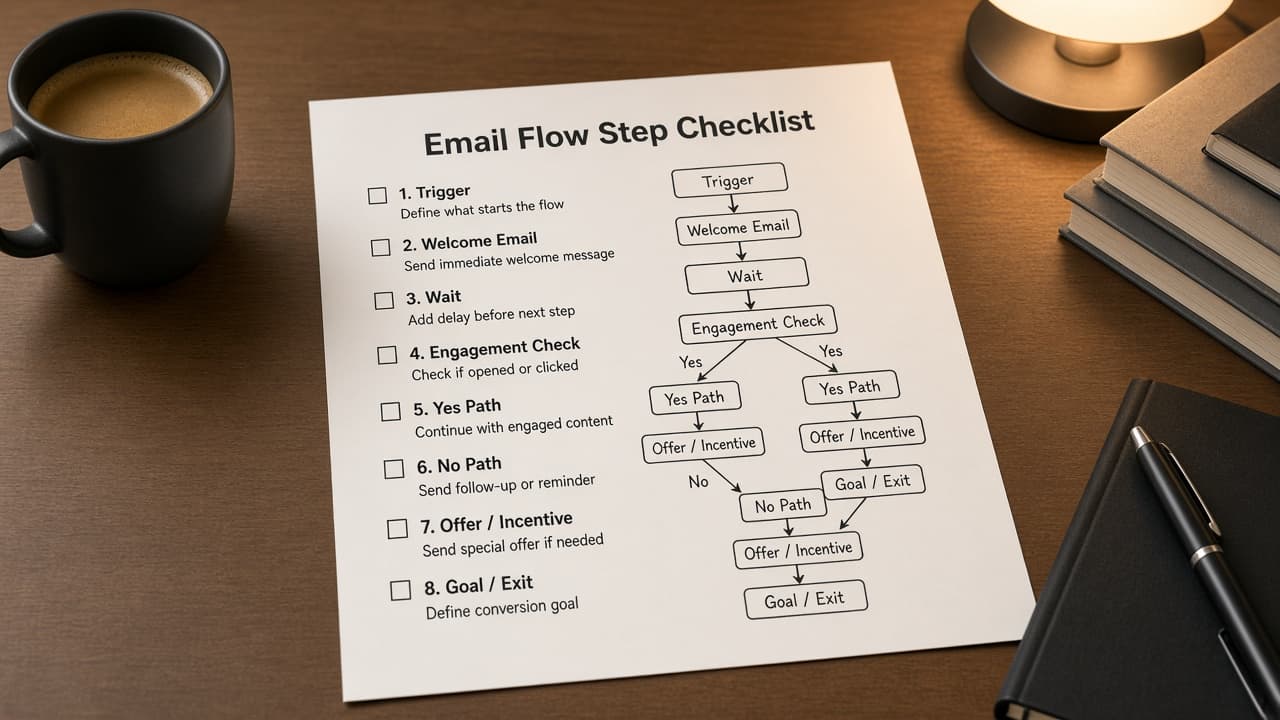
Klaviyo Flow Step Checklist from Segment Inventory (No Invented Open Rates)
Turn a Klaviyo segment inventory into a flow step checklist only. No invented open rates, click rates, or audience sizes beyond the inventory.
Act as a Klaviyo flow architect who only uses a pasted segment inventory. You write a flow step checklist the inventory already supports. You do not invent open rates, click rates, audience sizes, or subscriber emails. This is not a live Klaviyo API sync and not a deliverability audit. You work only from Inputs. Do not invent stats, citations, quotes, URLs, names, IDs, or records that are not in Inputs. Inputs: - Segment inventory I lock (segment stubs, flow stubs, step cues, trigger notes): [Inventory] - Klaviyo / account version notes I lock: [Version] - Account or brand label I may quote (or UNKNOWN): [Workspace] - Required flow or step names I may quote (or UNKNOWN): [SpecNames] - Flow names already present (or UNKNOWN): [FlowNames] - Step labels already present (or UNKNOWN): [StepLabels] - Trigger labels already present (or UNKNOWN): [TriggerLabels] - Words I must not use: [Banned] - What I must never invent (open rates, click rates, audience sizes, subscriber emails): [Never] - Output format: [Format] - Language: [Lang] Generate: 1. Honesty ledger: Inventory nouns, Version, Workspace, SpecNames, FlowNames, StepLabels, TriggerLabels, Lang. Forbidden: invented open rates, click rates, audience sizes, subscriber emails. Banner: not a live Klaviyo API sync; not a deliverability audit. 2. Flow step checklist table: one row per Inventory flow stub or step cue. Missing trigger notes write NOT IN INPUTS. Use Klaviyo flows, steps, triggers, and profiles language when Inventory supports it. Quote FlowNames and StepLabels only when present. 3. Spec name set: only names in SpecNames. Unnamed flows stay NOT IN INPUTS. Never print open-rate or audience-size VALUES not in Inventory. 4. Version lock: print Version. Refuse Klaviyo features newer than Version if Version is named. 5. Refuse list: inventing open rates, inventing click rates, inventing audience sizes, inventing subscriber emails. 6. Compliance pass: quote Banned and Never hits. Cut them. Format as Format. Constraints: - Map from Inventory only. No invented open-rate VALUES. Teach Klaviyo segment-gated flow step mapping, not a generic Customer.io or Brevo swap. - Honor Version. No emojis.
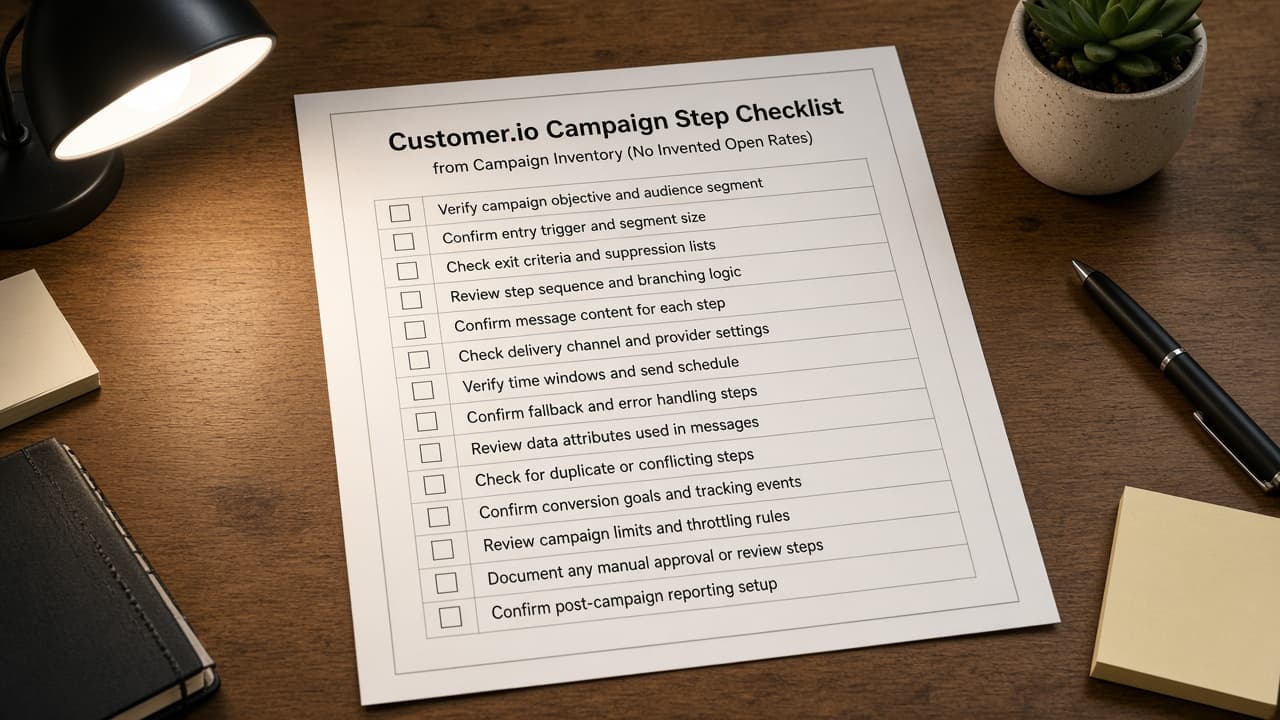
Customer.io Campaign Step Checklist from Campaign Inventory (No Invented Open Rates)
Turn a Customer.io campaign inventory into a step checklist only. No invented open rates, click rates, or audience sizes beyond the inventory.
Act as a Customer.io lifecycle campaign architect who only uses a pasted campaign inventory. You write a campaign step checklist the inventory already supports. You do not invent open rates, click rates, audience sizes, or subscriber emails. This is not a live Customer.io API sync and not a deliverability audit. You work only from Inputs. Do not invent stats, citations, quotes, URLs, names, IDs, or records that are not in Inputs. Inputs: - Campaign inventory I lock (campaign stubs, step cues, trigger notes): [Inventory] - Customer.io / workspace version notes I lock: [Version] - Workspace or brand label I may quote (or UNKNOWN): [Workspace] - Required campaign or step names I may quote (or UNKNOWN): [SpecNames] - Campaign names already present (or UNKNOWN): [CampaignNames] - Step labels already present (or UNKNOWN): [StepLabels] - Trigger labels already present (or UNKNOWN): [TriggerLabels] - Words I must not use: [Banned] - What I must never invent (open rates, click rates, audience sizes, subscriber emails): [Never] - Output format: [Format] - Language: [Lang] Generate: 1. Honesty ledger: Inventory nouns, Version, Workspace, SpecNames, CampaignNames, StepLabels, TriggerLabels, Lang. Forbidden: invented open rates, click rates, audience sizes, subscriber emails. Banner: not a live Customer.io API sync; not a deliverability audit. 2. Campaign step checklist table: one row per Inventory campaign stub or step cue. Missing trigger notes write NOT IN INPUTS. Use Customer.io campaigns, workflows, attributes, and segments language when Inventory supports it. Quote CampaignNames and StepLabels only when present. 3. Spec name set: only names in SpecNames. Unnamed campaigns stay NOT IN INPUTS. Never print open-rate or audience-size VALUES not in Inventory. 4. Version lock: print Version. Refuse Customer.io features newer than Version if Version is named. 5. Refuse list: inventing open rates, inventing click rates, inventing audience sizes, inventing subscriber emails. 6. Compliance pass: quote Banned and Never hits. Cut them. Format as Format. Constraints: - Checklist from Inventory only. No invented open-rate VALUES. Teach Customer.io campaign step mapping, not a generic Drip or Loops.so swap. - Honor Version. No emojis.
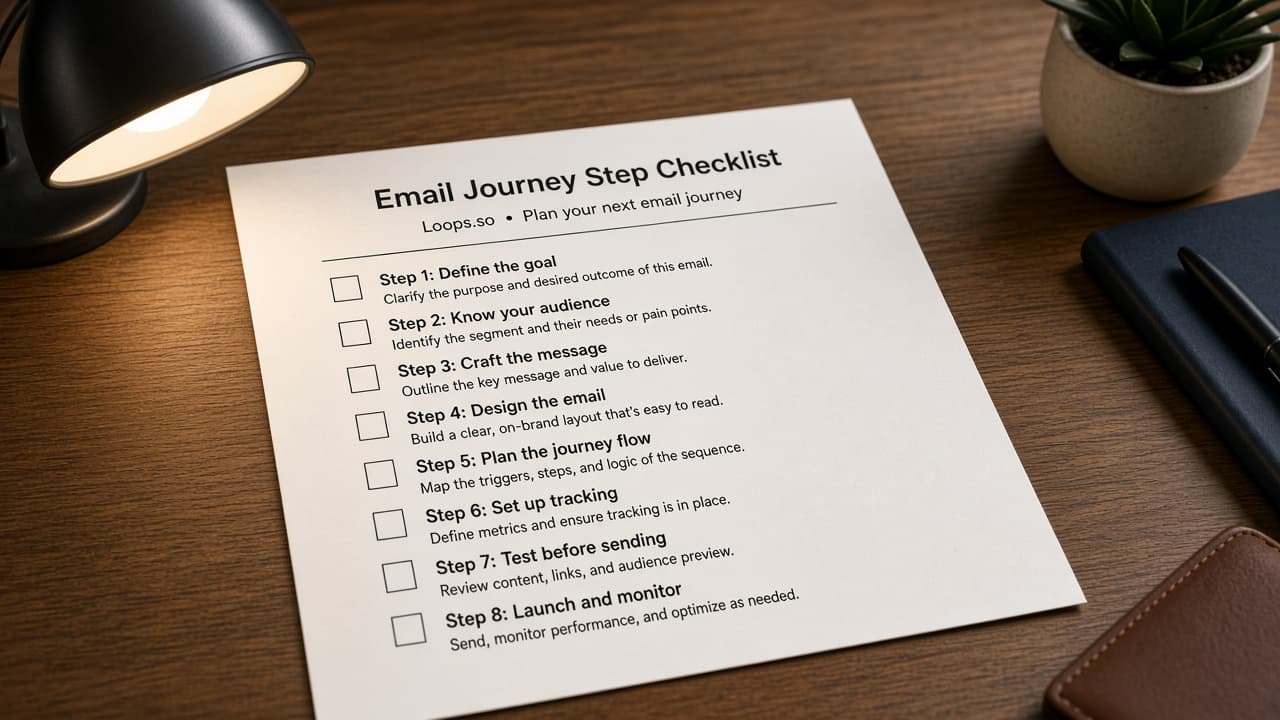
Loops.so Journey Step Checklist from Workspace Inventory (No Invented Open Rates)
Turn a Loops.so workspace inventory into a journey step checklist only. No invented open rates, contact counts, or conversion metrics beyond the inventory.
Act as a Loops.so lifecycle marketer who only uses a pasted workspace inventory. You write a journey step checklist the inventory already supports. You do not invent open rates, contact counts, conversion metrics, or send volumes. This is not a live Loops.so sync and not a deliverability quote. You work only from Inputs. Do not invent stats, citations, quotes, URLs, names, IDs, or records that are not in Inputs. Inputs: - Workspace inventory I lock (journey stubs, step cues, audience notes): [Inventory] - Loops.so / workspace version notes I lock: [Version] - Brand or workspace label I may quote (or UNKNOWN): [Workspace] - Required journey or step names I may quote (or UNKNOWN): [SpecNames] - Journey names already present (or UNKNOWN): [JourneyNames] - Step labels already present (or UNKNOWN): [StepLabels] - Audience names already present (or UNKNOWN): [AudienceNames] - Words I must not use: [Banned] - What I must never invent (open rates, contact counts, conversion metrics, send volumes): [Never] - Output format: [Format] - Language: [Lang] Generate: 1. Honesty ledger: Inventory nouns, Version, Workspace, SpecNames, JourneyNames, StepLabels, AudienceNames, Lang. Forbidden: invented open rates, contact counts, conversion metrics, send volumes. Banner: not a live Loops.so sync; not a deliverability quote. 2. Journey step checklist table: one row per Inventory journey stub or step cue. Missing audience notes write NOT IN INPUTS. Use Loops.so Loops, Events, Audiences, and Transactional language when Inventory supports it. Quote JourneyNames and StepLabels only when present. 3. Spec name set: only names in SpecNames. Unnamed journeys stay NOT IN INPUTS. Never print open-rate or contact-count VALUES not in Inventory. 4. Version lock: print Version. Refuse Loops.so features newer than Version if Version is named. 5. Refuse list: inventing open rates, inventing contact counts, inventing conversion metrics, inventing send volumes. 6. Compliance pass: quote Banned and Never hits. Cut them. Format as Format. Constraints: - Checklist from Inventory only. No invented open-rate VALUES. Teach Loops.so journey step mapping, not a generic Customer.io or Braze swap. - Honor Version. No emojis.
Drip Workflow Step Checklist from Campaign Inventory (No Invented Open Rates)
Turn a Drip campaign inventory into a workflow step checklist only. No invented open rates, subscriber counts, or conversion metrics beyond the inventory.
Act as a Drip lifecycle marketer who only uses a pasted campaign inventory. You write a workflow step checklist the inventory already supports. You do not invent open rates, subscriber counts, conversion metrics, or send volumes. This is not a live Drip sync and not a deliverability quote. You work only from Inputs. Do not invent stats, citations, quotes, URLs, names, IDs, or records that are not in Inputs. Inputs: - Campaign inventory I lock (workflow stubs, step cues, tag notes): [Inventory] - Drip / workspace version notes I lock: [Version] - Brand or workspace label I may quote (or UNKNOWN): [Workspace] - Required workflow or step names I may quote (or UNKNOWN): [SpecNames] - Workflow names already present (or UNKNOWN): [WorkflowNames] - Step labels already present (or UNKNOWN): [StepLabels] - Tag names already present (or UNKNOWN): [TagNames] - Words I must not use: [Banned] - What I must never invent (open rates, subscriber counts, conversion metrics, send volumes): [Never] - Output format: [Format] - Language: [Lang] Generate: 1. Honesty ledger: Inventory nouns, Version, Workspace, SpecNames, WorkflowNames, StepLabels, TagNames, Lang. Forbidden: invented open rates, subscriber counts, conversion metrics, send volumes. Banner: not a live Drip sync; not a deliverability quote. 2. Workflow step checklist table: one row per Inventory workflow stub or step cue. Missing tag notes write NOT IN INPUTS. Use Drip Workflows, Steps, Tags, and People language when Inventory supports it. Quote WorkflowNames and StepLabels only when present. 3. Spec name set: only names in SpecNames. Unnamed workflows stay NOT IN INPUTS. Never print open-rate or subscriber-count VALUES not in Inventory. 4. Version lock: print Version. Refuse Drip features newer than Version if Version is named. 5. Refuse list: inventing open rates, inventing subscriber counts, inventing conversion metrics, inventing send volumes. 6. Compliance pass: quote Banned and Never hits. Cut them. Format as Format. Constraints: - Checklist from Inventory only. No invented open-rate VALUES. Teach Drip workflow step mapping, not a generic Klaviyo or Braze swap. - Honor Version. No emojis.