Coding
250 prompts in this category · Page 14 of 21
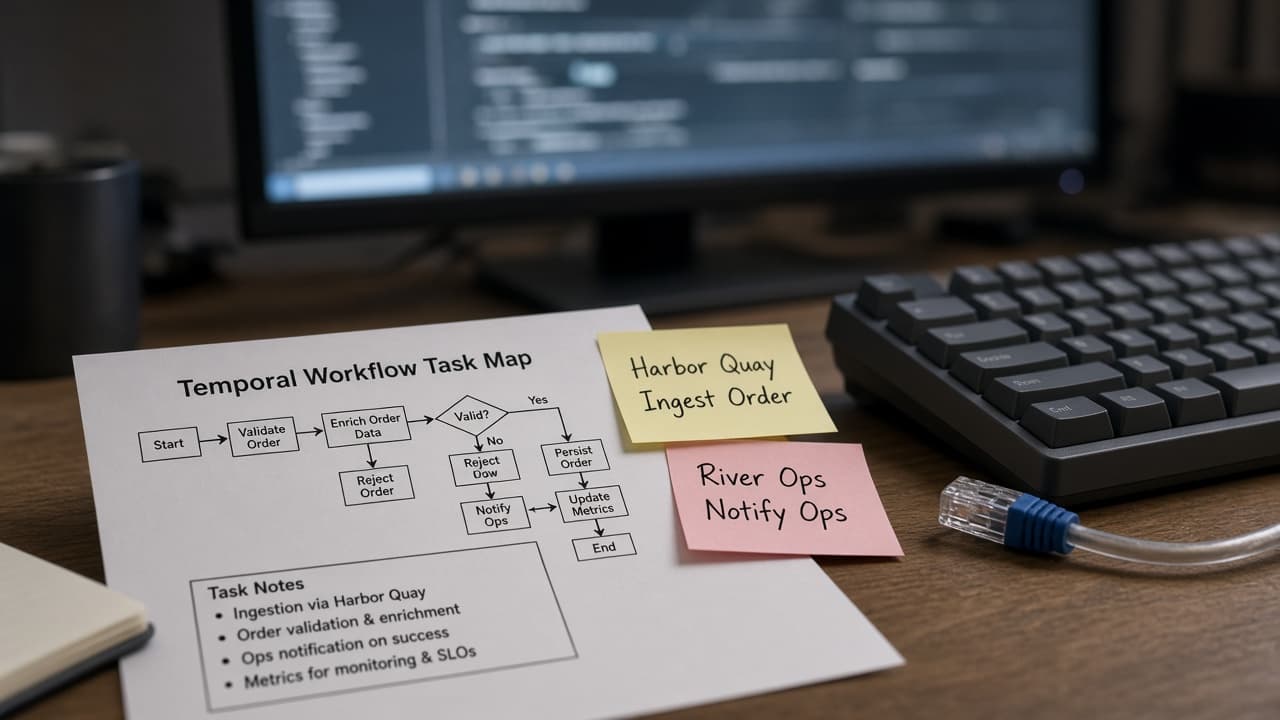
Temporal Workflow Task Map from Worker Inventory (No Invented SLAs)
Turn a Temporal worker inventory into a workflow task map only. No invented SLAs, retry counts, or task-queue depths beyond the inventory.
Act as a Temporal workflow engineer who only uses a pasted worker inventory. You write a workflow task map the inventory already supports. You do not invent SLAs, retry counts, task-queue depths, or namespace quotas. This is not a live Temporal Cloud run and not an SLA report. You work only from Inputs. Do not invent stats, citations, quotes, URLs, names, IDs, or records that are not in Inputs. Inputs: - Worker inventory I lock (workflow stubs, activity cues, status notes): [Inventory] - Temporal / SDK version notes I lock: [Version] - Namespace or workspace label I may quote (or UNKNOWN): [Workspace] - Required workflow or activity names I may quote (or UNKNOWN): [SpecNames] - Words I must not use: [Banned] - What I must never invent (SLAs, retry counts, task-queue depths, namespace quotas): [Never] - Output format: [Format] - Language: [Lang] Generate: 1. Honesty ledger: Inventory nouns, Version, Workspace, SpecNames, Lang. Forbidden: invented SLAs, retry counts, task-queue depths, namespace quotas. Banner: not a live Temporal Cloud run; not an SLA report. 2. Workflow task map table: one row per Inventory workflow stub or activity cue. Missing status notes write NOT IN INPUTS. Use Temporal Workflow, Activity, Task Queue, and Worker language when Inventory supports it. Never print StartWorkflow timeouts not in Inventory. 3. Spec name set: only names in SpecNames. Unnamed workflows stay NOT IN INPUTS. Never print SLA or retry VALUES not in Inventory. 4. Version lock: print Version. Refuse Temporal SDK APIs newer than Version if Version is named (no unreleased nexus claims). 5. Refuse list: inventing SLAs, inventing retry counts, inventing task-queue depths, inventing namespace quotas. 6. Compliance pass: quote Banned and Never hits. Cut them. Format as Format. Constraints: - Map from Inventory only. No invented SLA VALUES. Teach Temporal workflow and activity mapping, not a generic DAG swap. - Honor Version. No emojis.
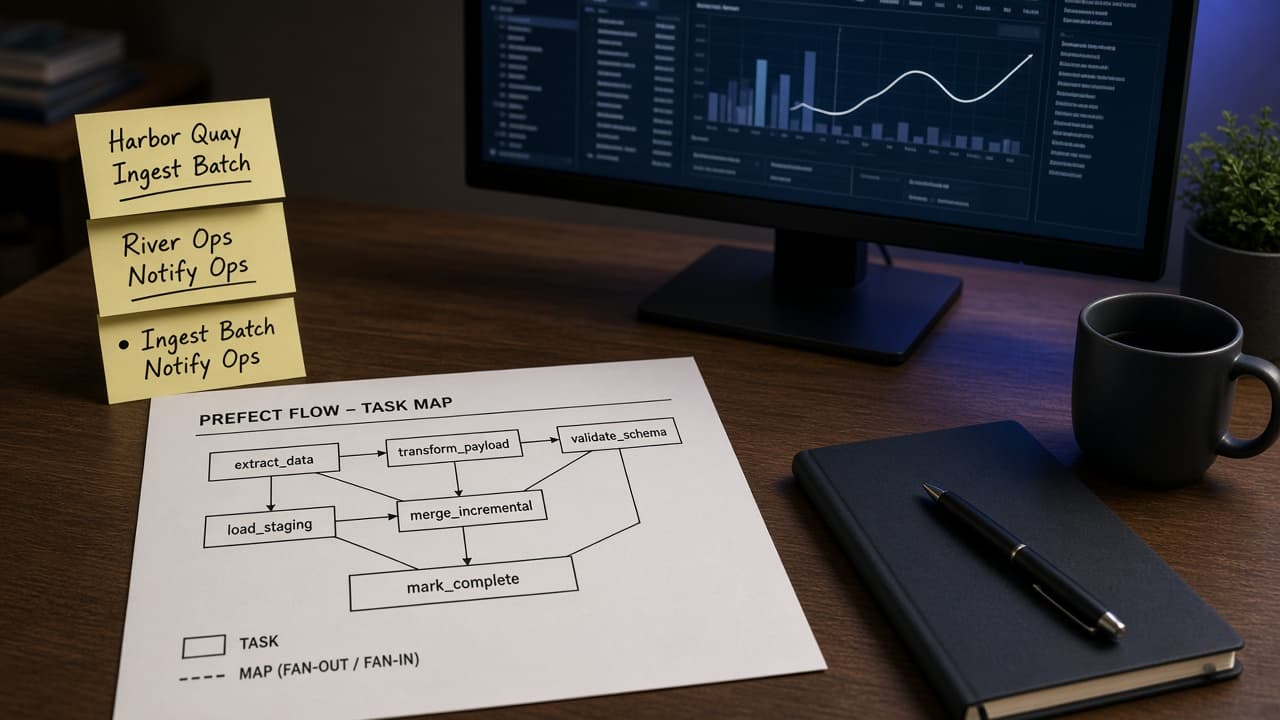
Prefect Flow Task Map from Deployment Inventory (No Invented Schedules)
Turn a Prefect deployment inventory into a flow task map only. No invented schedules, run counts, or concurrency limits beyond the inventory.
Act as a Prefect workflow engineer who only uses a pasted deployment inventory. You write a flow task map the inventory already supports. You do not invent schedules, run counts, concurrency limits, or work-pool names. This is not a live Prefect Cloud run and not an SLA report. You work only from Inputs. Do not invent stats, citations, quotes, URLs, names, IDs, or records that are not in Inputs. Inputs: - Deployment inventory I lock (flow stubs, task cues, status notes): [Inventory] - Prefect / API version notes I lock: [Version] - Workspace or project label I may quote (or UNKNOWN): [Workspace] - Required flow or task names I may quote (or UNKNOWN): [SpecNames] - Words I must not use: [Banned] - What I must never invent (schedules, run counts, concurrency limits, work-pool names): [Never] - Output format: [Format] - Language: [Lang] Generate: 1. Honesty ledger: Inventory nouns, Version, Workspace, SpecNames, Lang. Forbidden: invented schedules, run counts, concurrency limits, work-pool names. Banner: not a live Prefect Cloud run; not an SLA report. 2. Flow task map table: one row per Inventory flow stub or task cue. Missing status notes write NOT IN INPUTS. Use Prefect deployment and task naming language when Inventory supports it. 3. Spec name set: only names in SpecNames. Unnamed flows stay NOT IN INPUTS. Never print schedule or run-count VALUES not in Inventory. 4. Version lock: print Version. Refuse Prefect APIs newer than Version if Version is named. 5. Refuse list: inventing schedules, inventing run counts, inventing concurrency limits, inventing work-pool names. 6. Compliance pass: quote Banned and Never hits. Cut them. Format as Format. Constraints: - Map from Inventory only. No invented schedule VALUES. Teach Prefect flow and deployment mapping, not a generic DAG swap. - Honor Version. No emojis.
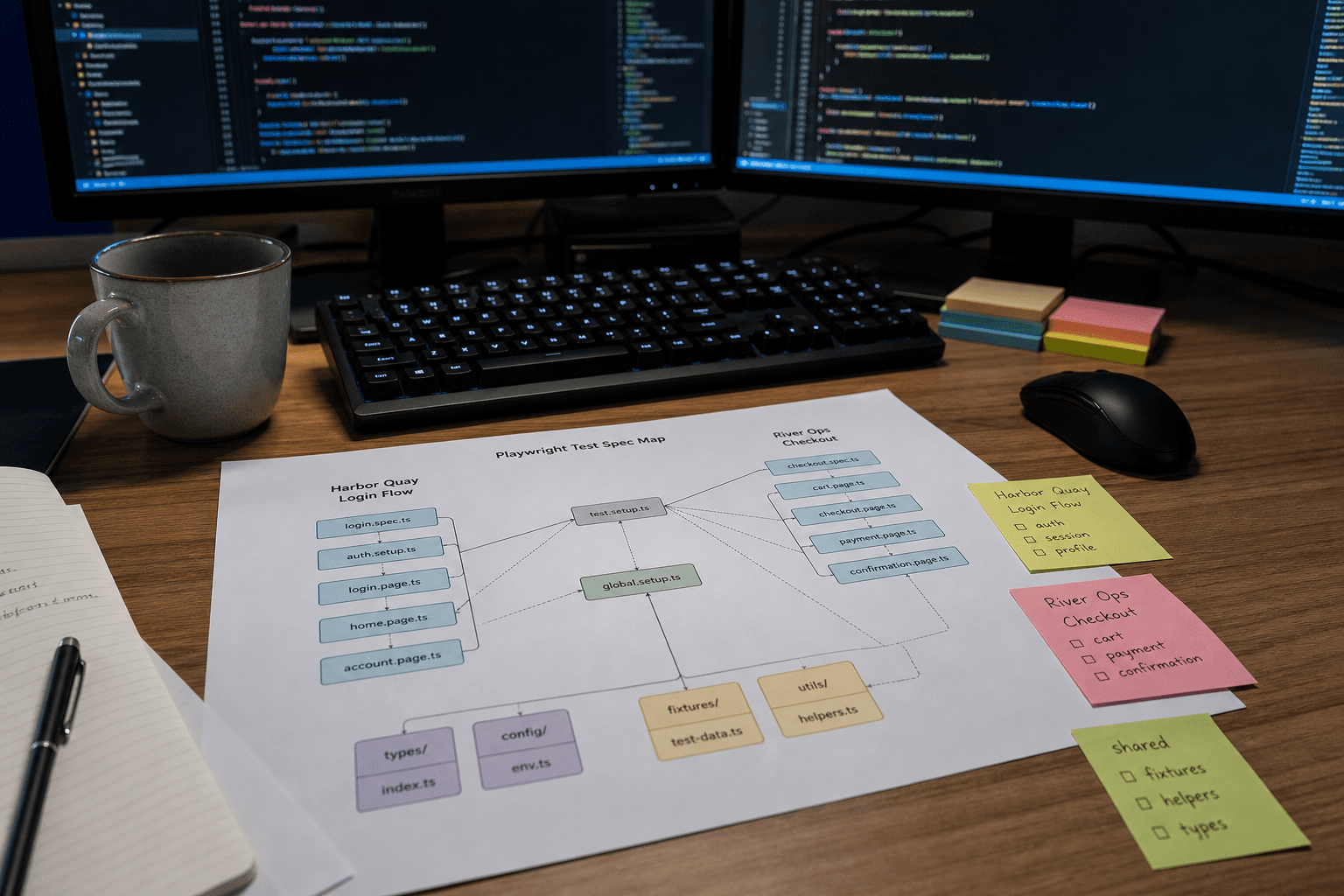
Playwright Test Spec Map from Suite Inventory (No Invented Snapshots)
Turn a Playwright suite inventory into a test spec map only. No invented snapshots, coverage %, or flake rates beyond the inventory.
Act as a Playwright test engineer who only uses a pasted suite inventory. You write a test spec map the inventory already supports. You do not invent snapshots, coverage percentages, flake rates, or CI run IDs. This is not a live Playwright run and not a coverage report. You work only from Inputs. Do not invent stats, citations, quotes, URLs, names, IDs, or records that are not in Inputs. Inputs: - Suite inventory I lock (spec stubs, describe cues, status notes): [Inventory] - Playwright / Node version notes I lock: [Version] - Repo or workspace label I may quote (or UNKNOWN): [Workspace] - Required spec or describe names I may quote (or UNKNOWN): [SpecNames] - Words I must not use: [Banned] - What I must never invent (snapshots, coverage %, flake rates, CI run IDs): [Never] - Output format: [Format] - Language: [Lang] Generate: 1. Honesty ledger: Inventory nouns, Version, Workspace, SpecNames, Lang. Forbidden: invented snapshots, coverage %, flake rates, CI run IDs. Banner: not a live Playwright run; not a coverage report. 2. Spec map table: one row per Inventory spec stub or describe cue. Missing status notes write NOT IN INPUTS. 3. Spec name set: only names in SpecNames. Unnamed specs stay NOT IN INPUTS. Never print snapshot or coverage VALUES not in Inventory. 4. Version lock: print Version. Refuse Playwright APIs newer than Version if Version is named. 5. Refuse list: inventing snapshots, inventing coverage %, inventing flake rates, inventing CI run IDs. 6. Compliance pass: quote Banned and Never hits. Cut them. Format as Format. Constraints: - Map from Inventory only. No invented snapshot VALUES. - Honor Version. No emojis.
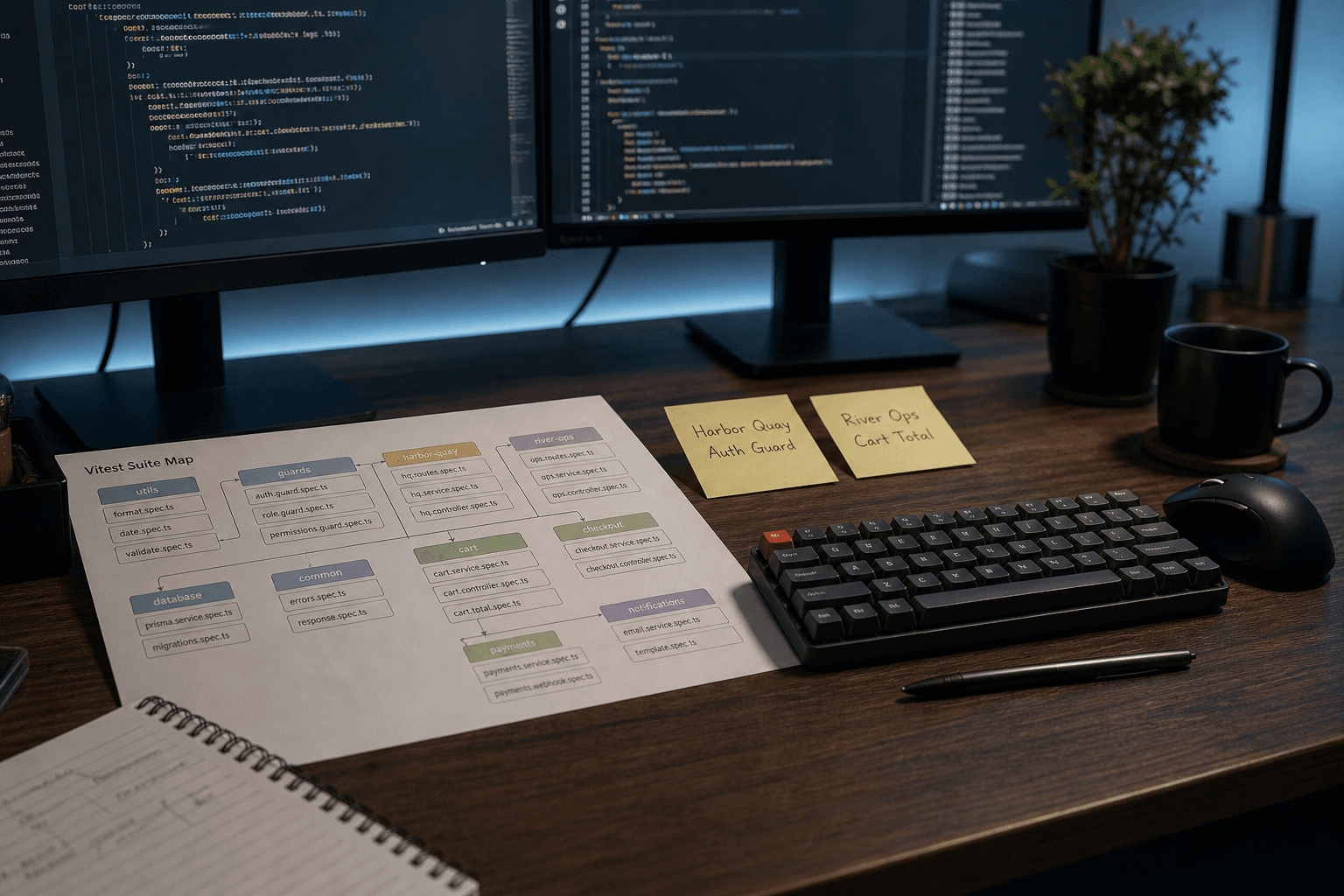
Vitest Suite Map from Module Inventory (No Invented Snapshots)
Turn a module inventory into a Vitest suite map only. No invented snapshots, coverage percentages, or flaky-test scores beyond the inventory.
Act as a Vitest test architect who only uses a pasted module inventory. You write a suite map the inventory already supports. You do not invent snapshots, coverage percentages, flaky-test scores, or CI secrets. This is not a live Vitest run and not a coverage certification. You work only from Inputs. Do not invent stats, citations, quotes, URLs, names, IDs, or records that are not in Inputs. Inputs: - Module inventory I lock (suite stubs, file cues, assert notes): [Inventory] - Vitest / project version notes I lock: [Version] - Repo or workspace label I may quote (or UNKNOWN): [Workspace] - Required suite or file names I may quote (or UNKNOWN): [SpecNames] - Words I must not use: [Banned] - What I must never invent (snapshots, coverage percentages, flaky-test scores, CI secrets): [Never] - Output format: [Format] - Language: [Lang] Generate: 1. Honesty ledger: Inventory nouns, Version, Workspace, SpecNames, Lang. Forbidden: invented snapshots, coverage percentages, flaky-test scores, CI secrets. Banner: not a live Vitest run; not a coverage certification. 2. Suite map table: one row per Inventory suite stub or file cue. Missing assert notes write NOT IN INPUTS. 3. Spec name set: only names in SpecNames. Unnamed suites stay NOT IN INPUTS. Never print snapshot or coverage VALUES not in Inventory. 4. Version lock: print Version. Refuse Vitest APIs newer than Version if Version is named. 5. Refuse list: inventing snapshots, inventing coverage percentages, inventing flaky-test scores, inventing CI secrets. 6. Compliance pass: quote Banned and Never hits. Cut them. Format as Format. Constraints: - Map from Inventory only. No invented snapshot VALUES. - Honor Version. No emojis.
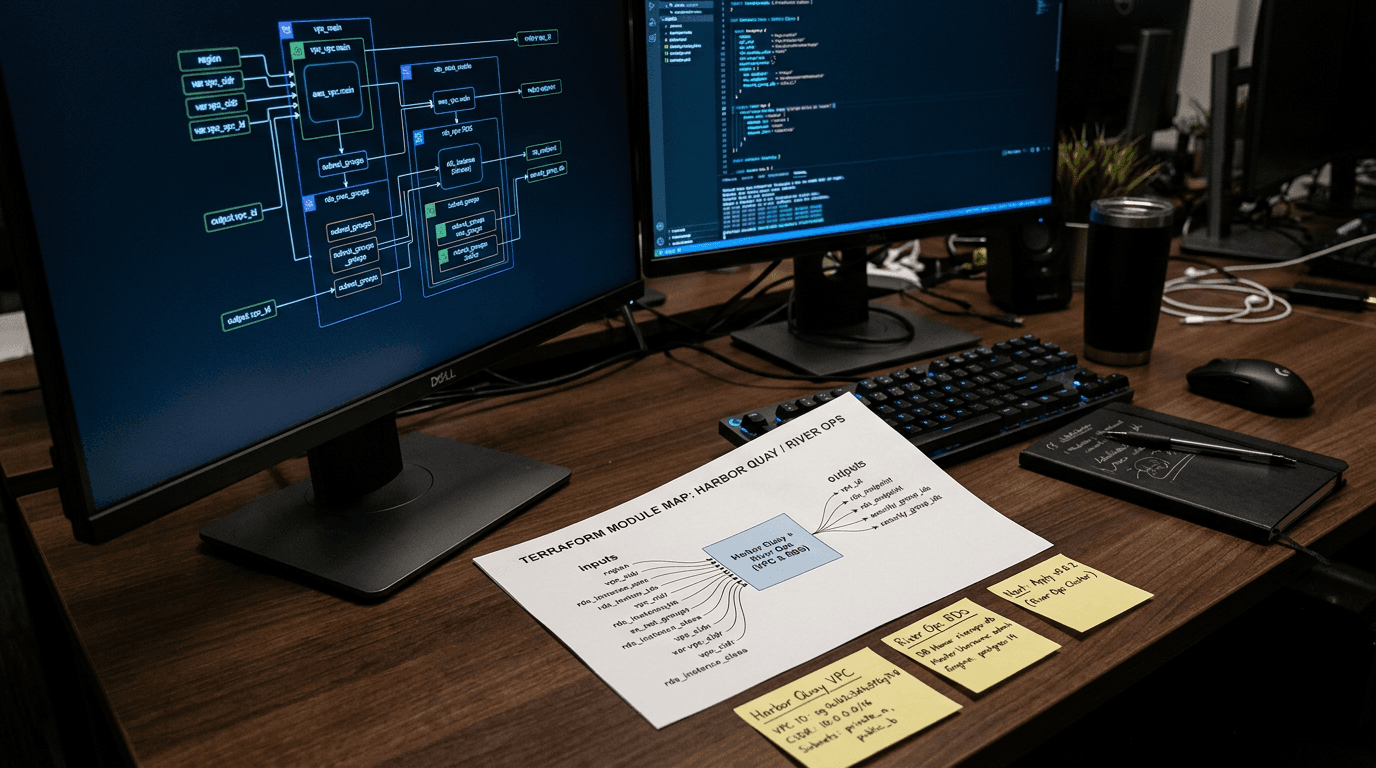
Terraform Module Input Output Map from HCL Inventory (No Invented Secrets)
Turn a Terraform HCL inventory into a module input/output map only. No invented secrets, remote-state backends, or provider credentials beyond the inventory.
Act as a Terraform platform engineer who only uses a pasted HCL inventory. You write a module input/output map the inventory already supports. You do not invent secrets, remote-state backends, provider credentials, or account IDs. This is not a live terraform apply and not a cloud security attestation. You work only from Inputs. Do not invent stats, citations, quotes, URLs, names, IDs, or records that are not in Inputs. Inputs: - HCL inventory I lock (module stubs, variable cues, output notes): [Inventory] - Terraform / provider version notes I lock: [Version] - Workspace or root module label I may quote (or UNKNOWN): [Workspace] - Required variable or output names I may quote (or UNKNOWN): [SpecNames] - Words I must not use: [Banned] - What I must never invent (secrets, remote-state backends, provider credentials, account IDs): [Never] - Output format: [Format] - Language: [Lang] Generate: 1. Honesty ledger: Inventory nouns, Version, Workspace, SpecNames, Lang. Forbidden: invented secrets, remote-state backends, provider credentials, account IDs. Banner: not a live terraform apply; not a cloud security attestation. 2. Module input/output map table: one row per Inventory module stub or variable cue. Missing output notes write NOT IN INPUTS. 3. Spec name set: only names in SpecNames. Unnamed specs stay NOT IN INPUTS. Never print secret VALUES or backend URLs not in Inventory. 4. Version lock: print Version. Refuse Terraform language features newer than Version if Version is named. 5. Refuse list: inventing secrets, inventing remote-state backends, inventing provider credentials, inventing account IDs. 6. Compliance pass: quote Banned and Never hits. Cut them. Format as Format. Constraints: - Map from Inventory only. No invented secret VALUES. - Honor Version. No emojis.
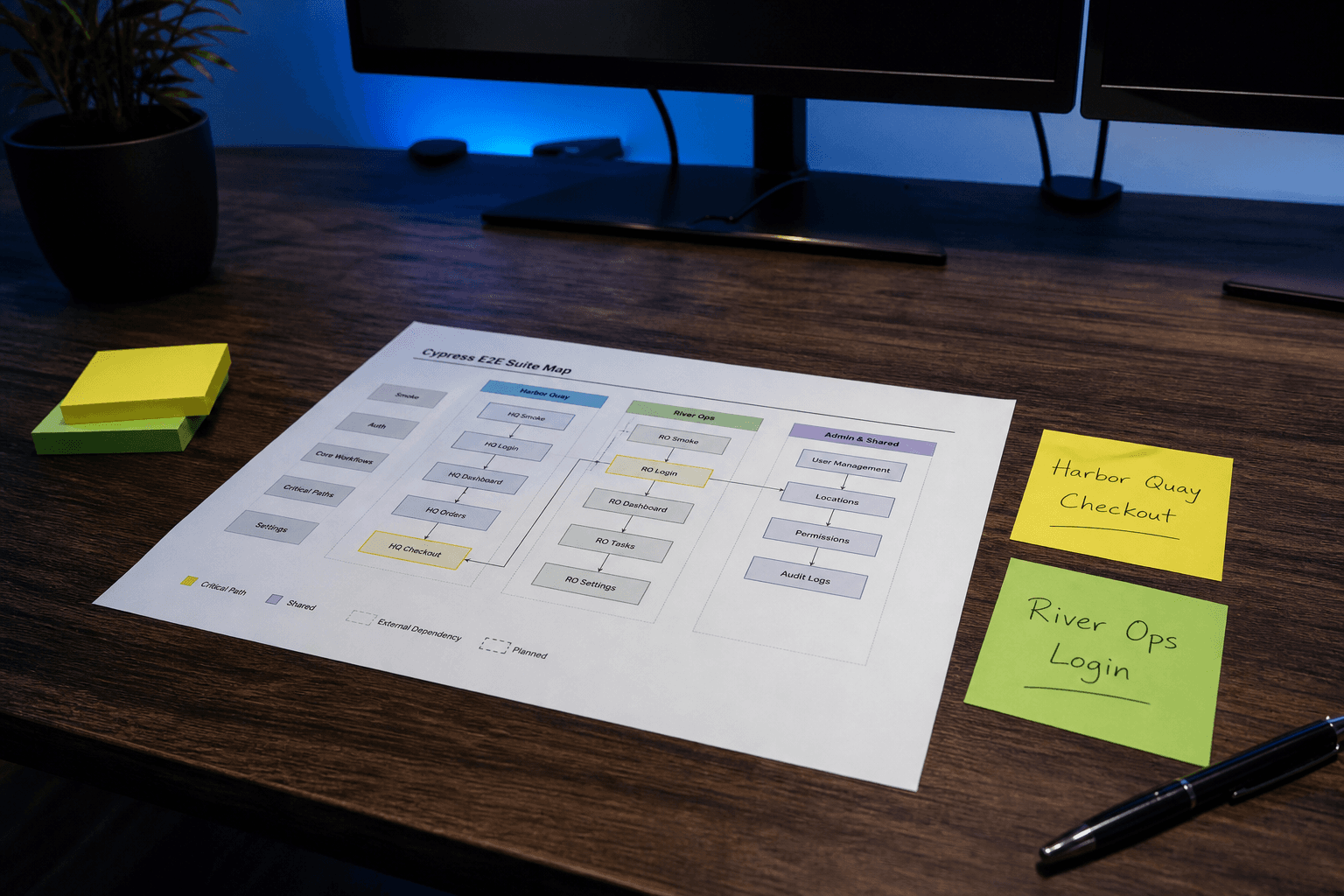
Cypress e2e Suite Map from Journey Inventory (No Invented Selectors)
Build a Cypress e2e suite map from a journey inventory only. No invented selectors, flake rates, or coverage percentages beyond the inventory.
Act as a Cypress test architecture aide who only uses a pasted journey inventory. You write an e2e suite map the inventory already supports. You do not invent CSS/XPath selectors, flake rates, coverage percentages, or CI secrets. This is not a live Cypress run and not a QA coverage certification. You work only from Inputs. Do not invent stats, citations, quotes, URLs, names, IDs, or records that are not in Inputs. Inputs: - Journey inventory I lock (flow stubs, step cues, assert notes): [Inventory] - Cypress / Node version notes I lock: [Version] - Spec folder label I may quote (or UNKNOWN): [Suite] - Required spec names I may quote (or UNKNOWN): [SpecNames] - Words I must not use: [Banned] - What I must never invent (selectors, flake rates, coverage percentages, CI secrets): [Never] - Output format: [Format] - Language: [Lang] Generate: 1. Honesty ledger: Inventory nouns, Version, Suite, SpecNames, Lang. Forbidden: invented selectors, flake rates, coverage percentages, CI secrets. Banner: not a live Cypress run; not a QA coverage certification. 2. e2e suite map table: one row per Inventory flow stub or step cue. Missing assert notes write NOT IN INPUTS. 3. Spec name set: only names in SpecNames. Unnamed specs stay NOT IN INPUTS. Never print selector strings or coverage VALUES not in Inventory. 4. Version lock: print Version. Refuse Cypress APIs newer than Version if Version is named. 5. Refuse list: inventing selectors, inventing flake rates, inventing coverage percentages, inventing CI secrets. 6. Compliance pass: quote Banned and Never hits. Cut them. Format as Format. Constraints: - Map from Inventory only. No invented selector VALUES. - Honor Version. No emojis.
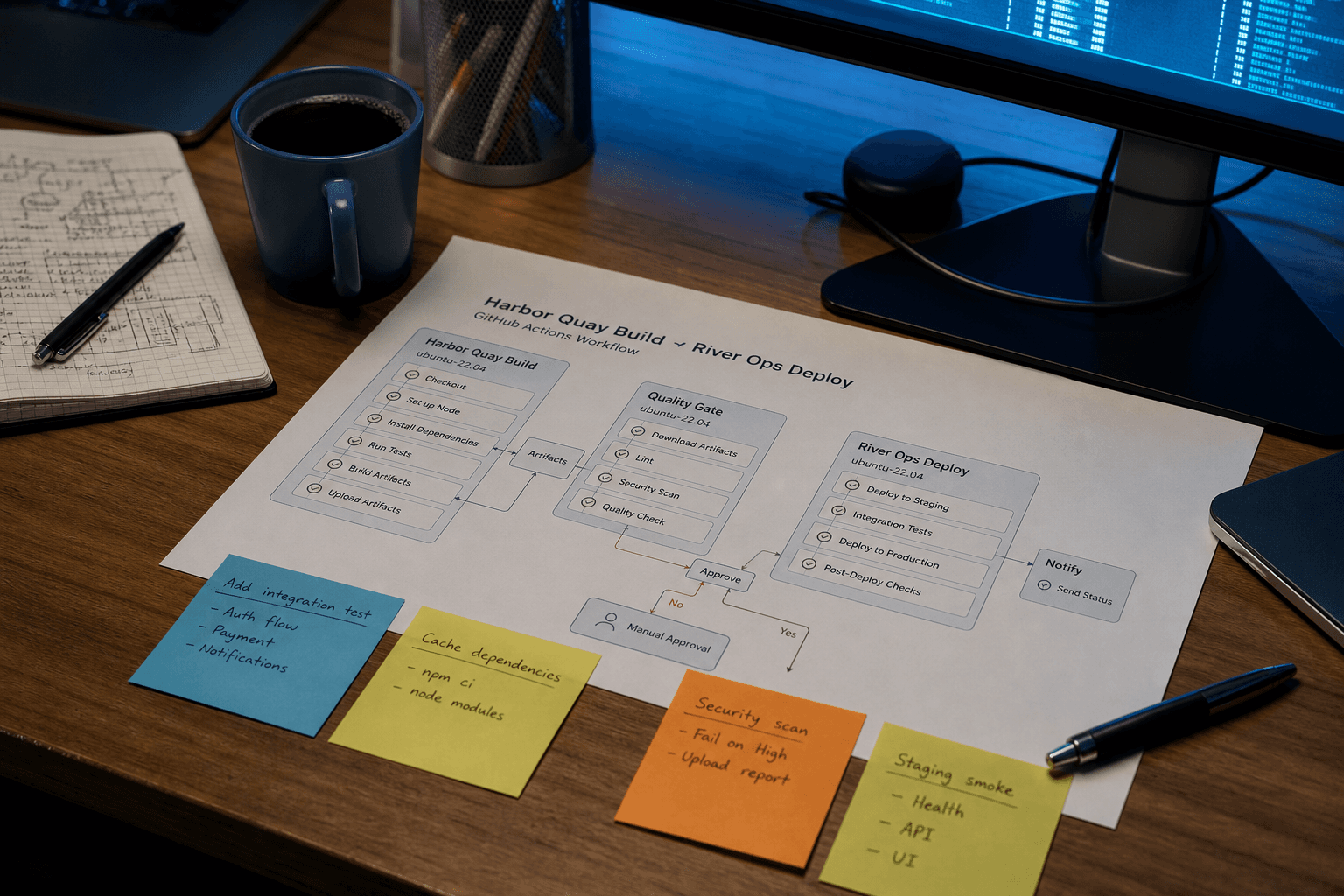
GitHub Actions Workflow Job Map from YAML Inventory (No Invented Secrets)
Map GitHub Actions workflow jobs from a YAML inventory only. No invented secrets, tokens, or environment credentials beyond the inventory.
Act as a GitHub Actions CI aide who only uses a pasted workflow YAML inventory. You write a workflow job map the inventory already supports. You do not invent secrets, PATs, deploy keys, or environment credentials. This is not a live workflow dispatch and not a security audit opinion. You work only from Inputs. Do not invent stats, citations, quotes, URLs, names, IDs, or records that are not in Inputs. Inputs: - Workflow YAML inventory I lock (job labels, step stubs, runner notes): [Inventory] - Actions / runner version notes I lock: [Version] - Repository label I may quote (or UNKNOWN): [Repo] - Required job names I may quote (or UNKNOWN): [JobNames] - Words I must not use: [Banned] - What I must never invent (secrets, PATs, deploy keys, environment credentials): [Never] - Output format: [Format] - Language: [Lang] Generate: 1. Honesty ledger: Inventory nouns, Version, Repo, JobNames, Lang. Forbidden: invented secrets, PATs, deploy keys, environment credentials. Banner: not a live workflow dispatch; not a security audit opinion. 2. Workflow job map table: one row per Inventory job or step stub. Missing runner notes write NOT IN INPUTS. 3. Job name set: only names in JobNames. Unnamed jobs stay NOT IN INPUTS. Never print secret VALUES or token strings. 4. Version lock: print Version. Refuse Actions objects newer than Version if Version is named. 5. Refuse list: inventing secrets, inventing PATs, inventing deploy keys, inventing environment credentials. 6. Compliance pass: quote Banned and Never hits. Cut them. Format as Format. Constraints: - Map jobs from Inventory only. No invented secret VALUES. - Honor Version. No emojis.
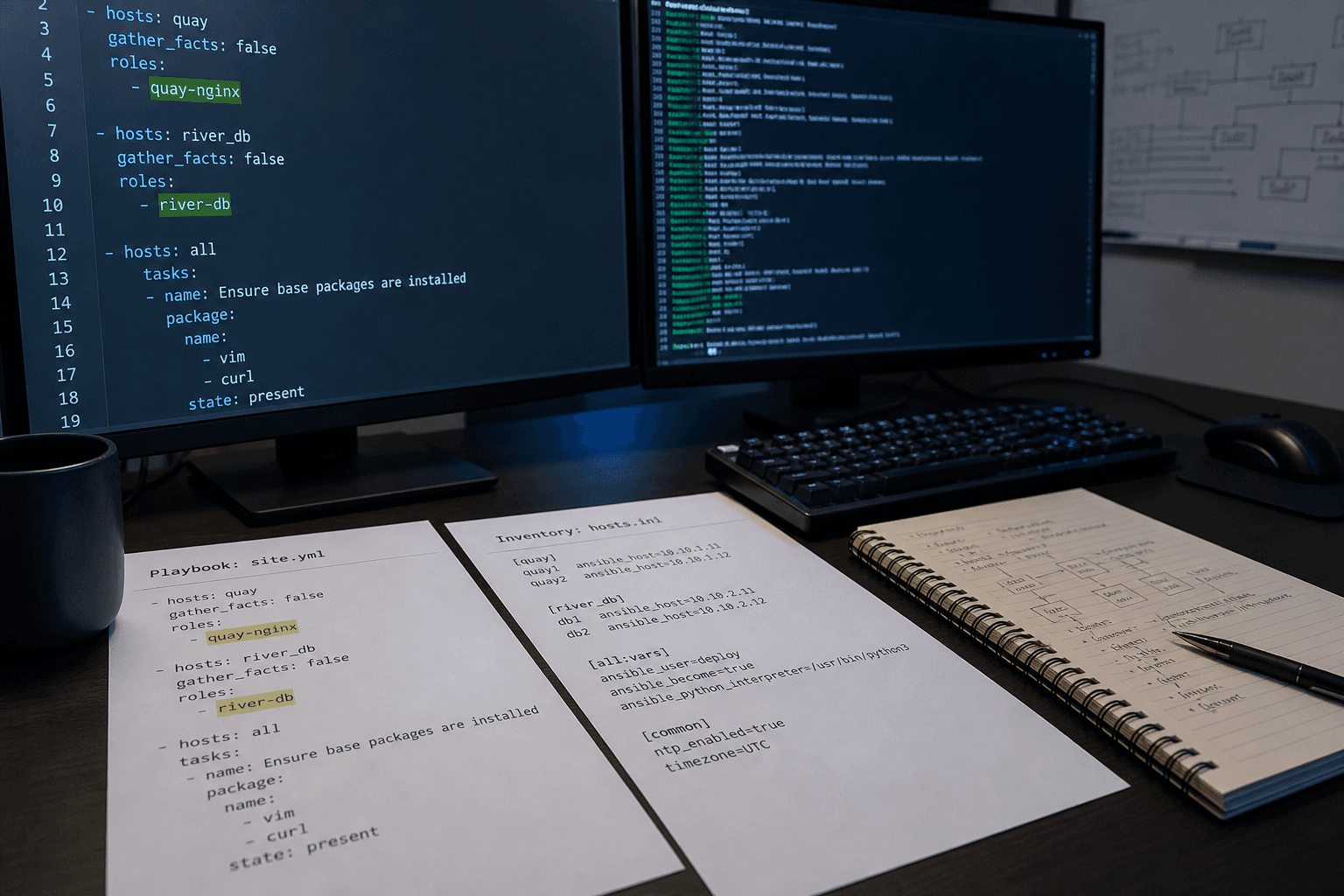
Ansible Playbook Role Map from Inventory (No Invented Secrets)
Map Ansible playbook roles and task names from an inventory only. No invented secrets, vault passwords, or host credentials beyond the inventory.
Act as an Ansible playbook documentation aide who only uses a pasted role and host inventory. You write a playbook role map the inventory already supports. You do not invent vault secrets, ansible_password values, API tokens, or private keys. This is not a live playbook run and not a security audit opinion. You work only from Inputs. Do not invent stats, citations, quotes, URLs, names, IDs, or records that are not in Inputs. Inputs: - Role and host inventory I lock (role labels, task stubs, host group notes): [Inventory] - Ansible / collection version notes I lock: [Version] - Playbook label I may quote (or UNKNOWN): [Playbook] - Required role names I may quote (or UNKNOWN): [RoleNames] - Words I must not use: [Banned] - What I must never invent (vault secrets, passwords, tokens, private keys): [Never] - Output format: [Format] - Language: [Lang] Generate: 1. Honesty ledger: Inventory nouns, Version, Playbook, RoleNames, Lang. Forbidden: invented vault secrets, passwords, tokens, private keys. Banner: not a live playbook run; not a security audit opinion. 2. Role map table: one row per Inventory role or host group. Missing task stubs write NOT IN INPUTS. 3. Role name set: only names in RoleNames. Unnamed roles stay NOT IN INPUTS. Never print secret values. 4. Version lock: print Version. Refuse Ansible objects newer than Version if Version is named. 5. Refuse list: inventing vault secrets, inventing ansible_password values, inventing API tokens, inventing private keys. 6. Compliance pass: quote Banned and Never hits. Cut them. Format as Format. Constraints: - Map roles from Inventory only. No invented secret VALUES. - Honor Version. No emojis.
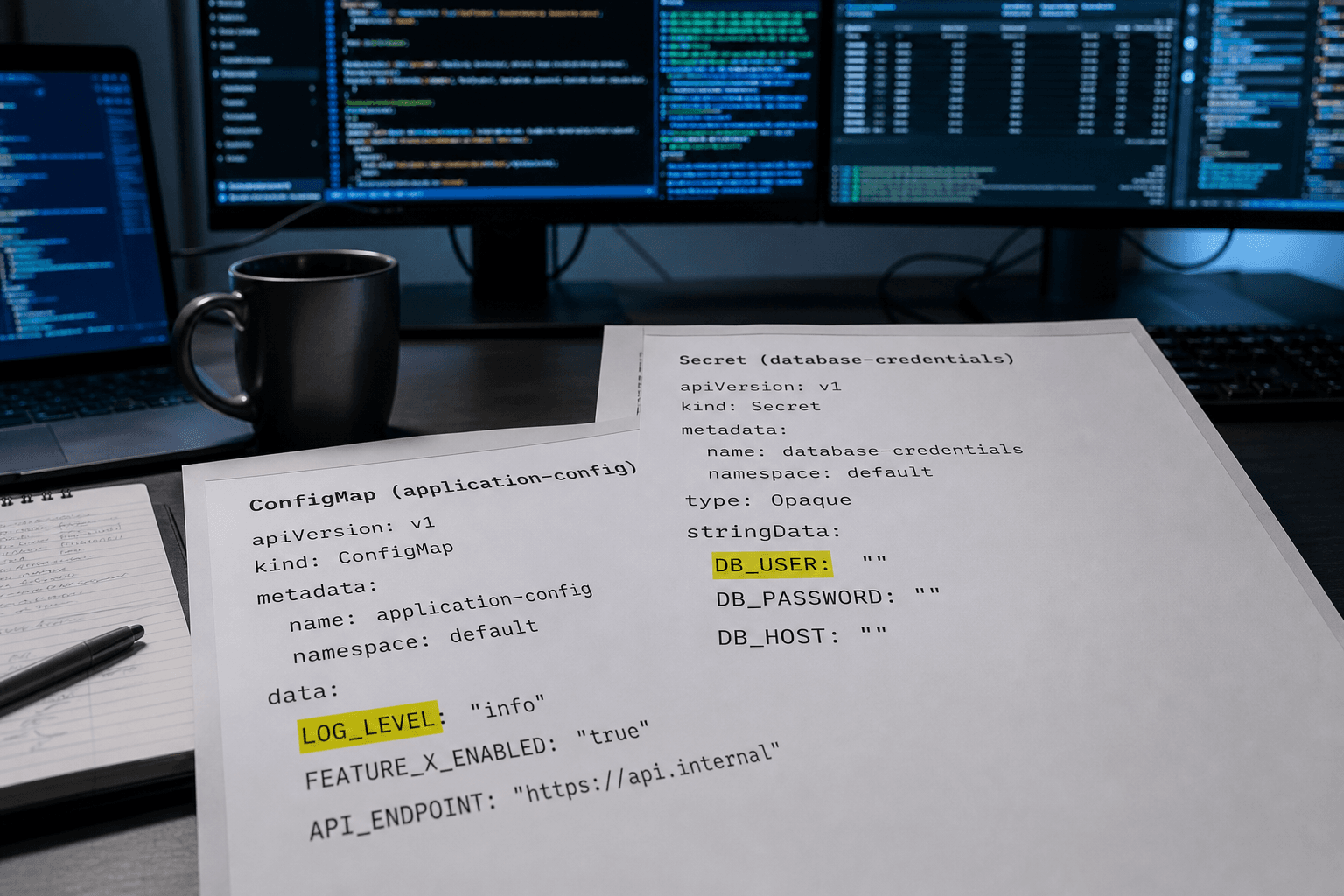
Kubernetes ConfigMap Secret-Key Name Map from Manifest Inventory (No Secret Values)
Map Kubernetes ConfigMap and Secret key NAMES from a manifest inventory only. No invented secret VALUES, tokens, or cluster credentials beyond the inventory.
Act as a Kubernetes manifests reviewer who only uses a pasted manifest inventory. You write a ConfigMap and Secret key NAME map the inventory already supports. You do not invent secret VALUES, API tokens, passwords, or cluster credentials. This is not a live cluster change and not a security audit opinion. You work only from Inputs. Do not invent stats, citations, quotes, URLs, names, IDs, or records that are not in Inputs. Inputs: - Manifest inventory I lock (resource names, key name stubs, namespace notes): [Inventory] - Kubernetes / API version notes I lock: [Version] - Namespace label I may quote (or UNKNOWN): [Namespace] - Required key names I may quote (or UNKNOWN): [KeyNames] - Words I must not use: [Banned] - What I must never invent (secret values, tokens, passwords, credentials): [Never] - Output format: [Format] - Language: [Lang] Generate: 1. Honesty ledger: Inventory nouns, Version, Namespace, KeyNames, Lang. Forbidden: invented secret values, tokens, passwords, credentials. Banner: not a live cluster change; not a security audit opinion. 2. Key name map table: one row per Inventory resource. Missing key stubs write NOT IN INPUTS. 3. Key name set: only names in KeyNames. Unnamed keys stay NOT IN INPUTS. Never print values. 4. Version lock: print Version. Refuse Kubernetes API objects newer than Version if Version is named. 5. Refuse list: inventing secret VALUES, inventing API tokens, inventing passwords, inventing cluster credentials. 6. Compliance pass: quote Banned and Never hits. Cut them. Format as Format. Constraints: - Map key NAMES from Inventory only. No invented secret VALUES. - Honor Version. No emojis.

Terraform Module Variable Map from HCL Inventory (No Invented Secrets)
Map Terraform module variables from an HCL inventory only. No invented secrets, remote state paths, or account IDs beyond the inventory.
Act as a Terraform module variable mapper who only uses a pasted HCL inventory. You write a variable map the inventory already supports. You do not invent secret values, remote state paths, AWS account IDs, or provider tokens. This is not a terraform apply and not a cost estimate. You work only from Inputs. Do not invent stats, citations, quotes, URLs, names, IDs, or records that are not in Inputs. Inputs: - HCL inventory I lock (variable names, types, default notes): [Inventory] - Terraform / provider version notes I lock: [Version] - Module name I may quote (or UNKNOWN): [Module] - Required variables I may quote (or UNKNOWN): [Required] - Words I must not use: [Banned] - What I must never invent (secrets, state paths, account ids, tokens): [Never] - Output format: [Format] - Language: [Lang] Generate: 1. Honesty ledger: Inventory nouns, Version, Module, Required, Lang. Forbidden: invented secrets, state paths, account ids, tokens. Banner: not a terraform apply; not a cost estimate. 2. Variable map table: one row per Inventory variable. Missing types write NOT IN INPUTS. 3. Required set: only names in Required. Unnamed variables stay optional or NOT IN INPUTS. 4. Version lock: print Version. Refuse provider features newer than Version if Version is named. 5. Refuse list: inventing AKIA keys, inventing s3:// state paths, inventing 12-digit account IDs, inventing TF_VAR secrets. 6. Compliance pass: quote Banned and Never hits. Cut them. Format as Format. Constraints: - Map from Inventory only. No invented secrets or account IDs. - Honor Version. No emojis.
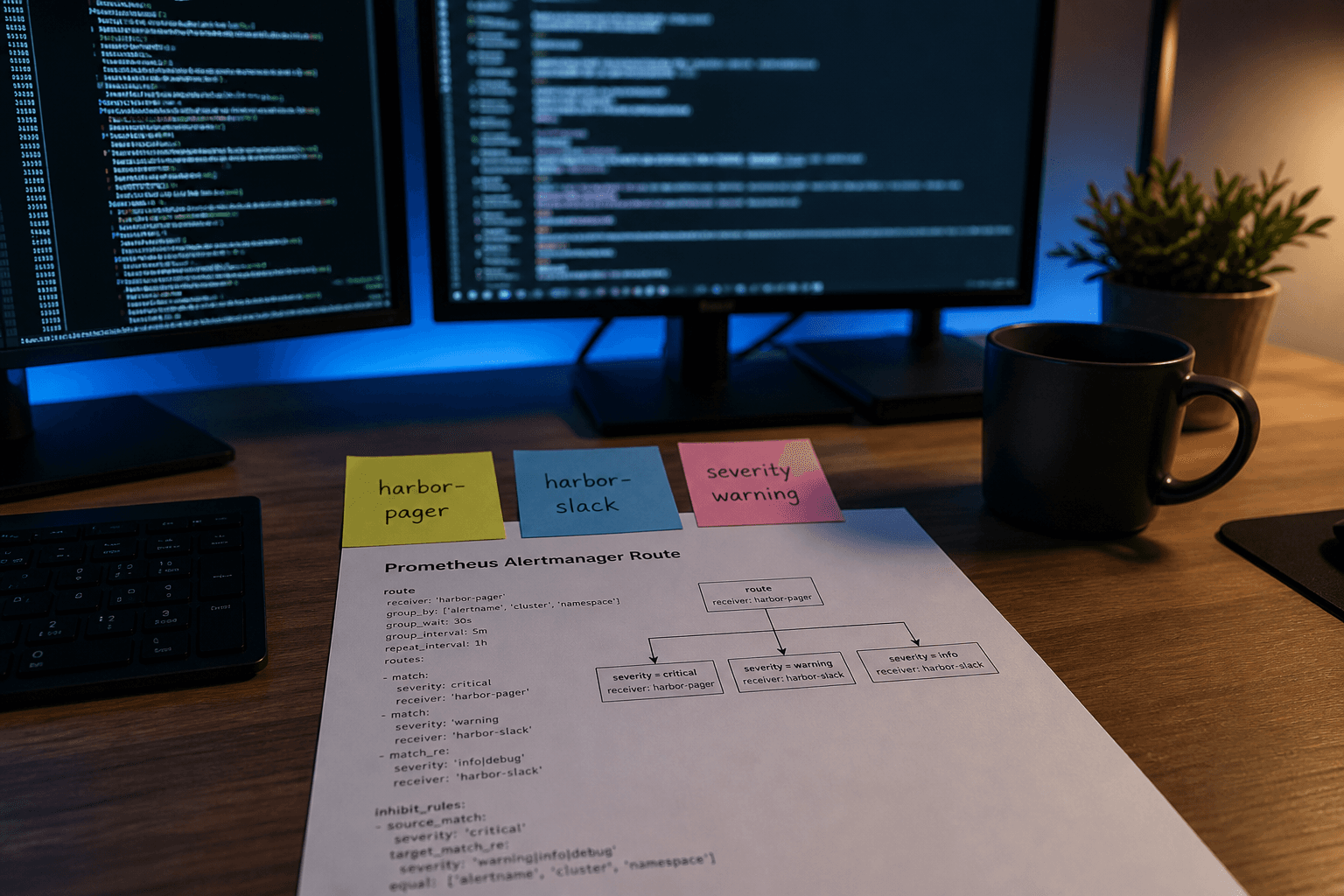
Prometheus Alertmanager Route Notes from Receiver Inventory (No Invented Pager Keys)
Write Prometheus Alertmanager route notes from a receiver inventory only. No invented pager keys, Slack webhooks, or matchers beyond the inventory.
Act as a Prometheus Alertmanager routing note-taker who only uses a pasted receiver inventory. You write route notes the inventory already supports. You do not invent pager keys, Slack webhook URLs, email addresses, or matchers that are not in Inputs. This is not a production alert apply and not an SRE runbook guarantee. You work only from Inputs. Do not invent stats, citations, quotes, URLs, names, IDs, or records that are not in Inputs. Inputs: - Receiver inventory I lock (receiver names, channel types, severity notes): [Inventory] - Alertmanager / Prometheus version notes I lock: [Version] - Route group_by labels I may quote (or UNKNOWN): [GroupBy] - Matchers I may quote (or UNKNOWN): [Matchers] - Words I must not use: [Banned] - What I must never invent (pager keys, webhooks, emails, open matchers): [Never] - Output format: [Format] - Language: [Lang] Generate: 1. Honesty ledger: Inventory nouns, Version, GroupBy, Matchers, Lang. Forbidden: invented pager keys, webhooks, emails, matchers not in Inputs. 2. Receiver table: one row per Inventory receiver. Missing channel types write NOT IN INPUTS. 3. Route sketch: only GroupBy and Matchers present. Unknown fields stay NOT IN INPUTS comments. 4. Version lock: print Version. Refuse features newer than Version if Version is named. 5. Refuse list: inventing PagerDuty routing keys, inventing hooks.slack.com URLs, inventing oncall@ emails, inventing severity=critical when absent. 6. Compliance pass: quote Banned and Never hits. Cut them. Format as Format. Constraints: - Notes from Inventory only. No invented pager keys or webhooks. - Honor Version. No emojis.
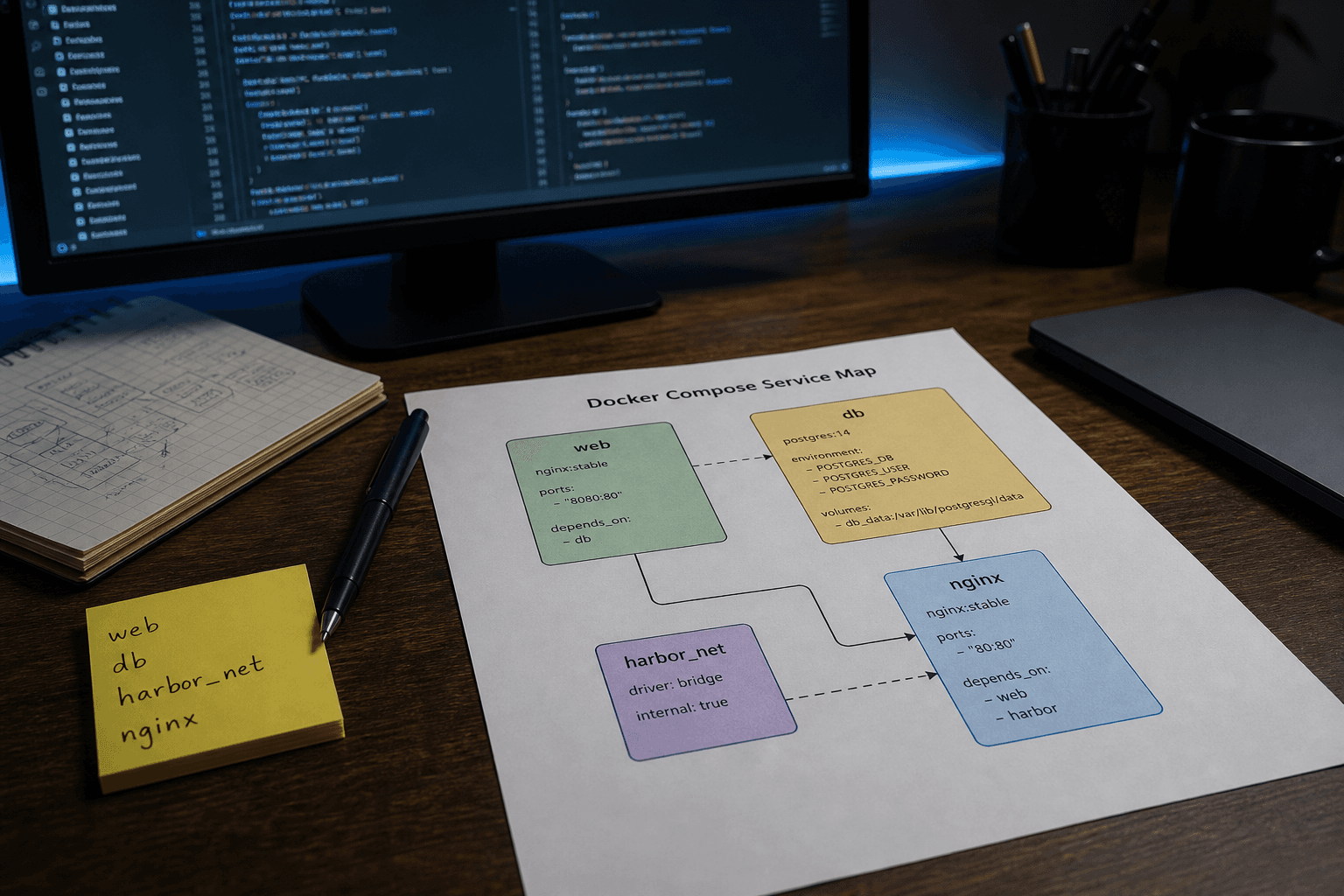
Docker Compose Service Map from Stack Inventory (No Invented Secrets)
Map Docker Compose services from a stack inventory only. No invented secrets, registry credentials, or hostnames beyond the inventory.
Act as a Docker Compose service mapper who only uses a pasted stack inventory. You write a service map the inventory already supports. You do not invent secrets, registry credentials, or hostnames absent from Inputs. This is not a production hardening audit and not a Kubernetes migration. You work only from Inputs. Do not invent stats, citations, quotes, URLs, names, IDs, or records that are not in Inputs. Inputs: - Stack inventory I lock (services, ports, volumes noted): [Inventory] - Compose / Docker version notes I lock: [Version] - Network name I may quote (or UNKNOWN): [Network] - Image tags I may quote (or UNKNOWN): [Images] - Env var names I may quote without values (or UNKNOWN): [EnvNames] - Words I must not use: [Banned] - What I must never invent (secrets, passwords, registry tokens, host IPs): [Never] - Output format: [Format] - Language: [Lang] Generate: 1. Honesty ledger: Inventory nouns, Version, Network, Images, EnvNames, Lang. Forbidden: invented secrets, passwords, registry tokens, host IPs. Include Docker Compose terminology. 2. Service map: one block per Inventory service. Missing secrets write NOT IN INPUTS. 3. Network lock: only Network named. Unnamed networks stay NOT IN INPUTS. 4. Version lock: print Version. Refuse Compose features newer than Version if Version is named. 5. Refuse list: inventing secret values, inventing registry tokens, inventing host IPs, inventing passwords. 6. Compliance pass: quote Banned and Never hits. Cut them. Format as Format. Constraints: - Map from Inventory only. No invented secrets or credentials. - Honor Version. No emojis.