How to Use: Salesforce Opportunity Hygiene Scorecard (No Invented ARR Totals)
How to use the Salesforce Opportunity Hygiene Scorecard (No Invented ARR Totals) PromptDig prompt without inventing metrics.
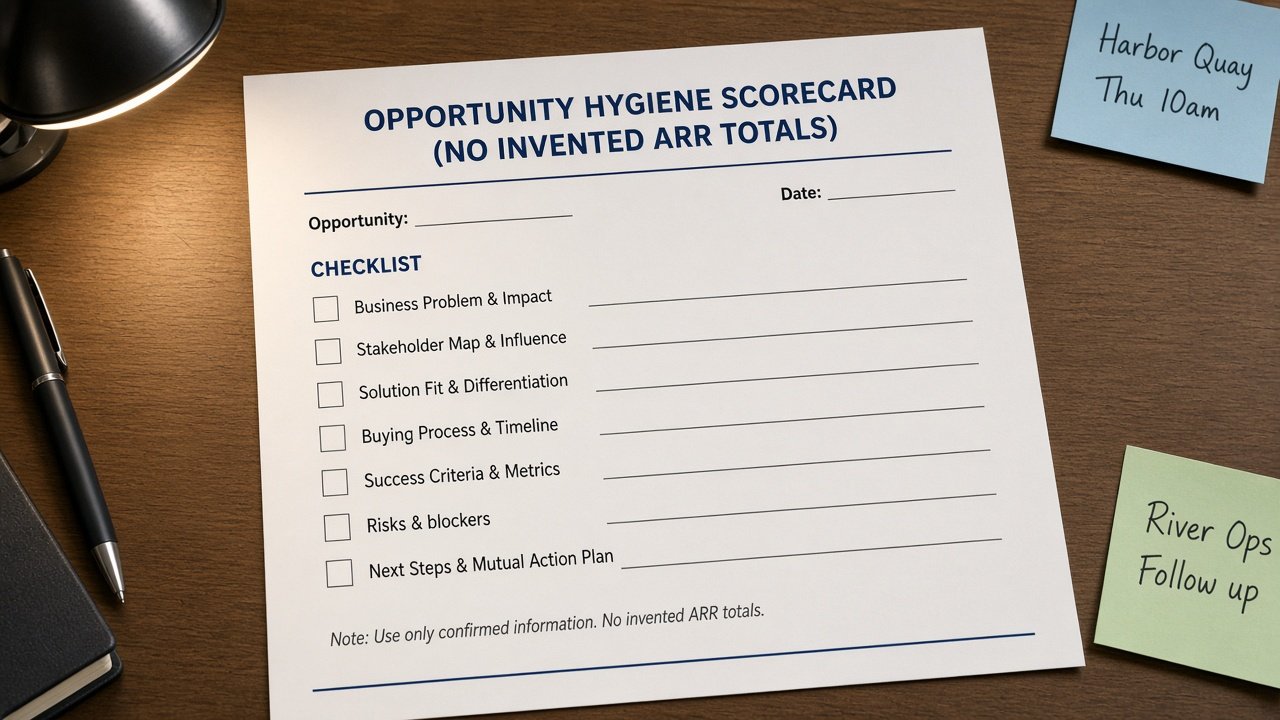
You pasted real Salesforce notes and need a clean opportunity hygiene scorecard without invented numbers. This PromptDig prompt turns only what you already locked into a structured deliverable for that job.
What this prompt does
It locks your domain fields, version, and refuse rules, then builds an honesty ledger plus the opportunity hygiene scorecard. Missing cells stay NOT IN INPUTS instead of guessing.
Use it when you already have real stubs from Salesforce and want a teachable output for this job, not a generic template swap from another vendor. The Generate steps name Salesforce nouns on purpose so a title swap into another category would fail the swap-title test.
The deliverable is aimed at Salesforce workflows. Reviewers should see your locked nouns echoed in the rows, not marketing fluff. Cap style limits stay soft unless you add them later.
How to fill the brackets
- Paste OppExcerpt and HygieneNotes. Lock Version. Fill OppPairs, HygieneFields, and Owners.
- Lock Version to what you actually run. If you do not know the version, write unknown rather than guessing a marketing release name.
- Quote workspace or party labels when known; otherwise UNKNOWN.
- Fill the three domain fields shown in the prompt. Leave UNKNOWN cells alone instead of inventing polish.
- List Banned words and Never invent rules that match the risks in your org wiki.
Keep Harbor Quay and River Ops out of your production paste. Those labels exist only so the example_input shows two concrete rows. Replace them with your real service names, course titles, or brand kit folders before you run the prompt.
Example shape
The included example_input uses Harbor Quay and River Ops labels so you can see how two locked rows become a checklist, rubric, packet, recipe, board, outline, or runbook without inventing metrics. Swap those labels for your own before you run it. Prefer a short second pass that only reorders rows over asking for a longer rewrite that invents missing fields.
When the model returns the opportunity hygiene scorecard, check that every row cites a locked noun. If a row invents ARR totals, win rates, or forecast amounts, quote the Never line and re-run. A clean output with two honest rows beats a long table full of guesses.
Why the honesty rules matter
Teams lose trust when a model invents ARR totals, win rates, or forecast amounts. This prompt quotes Banned and Never hits, then cuts them. An honesty ledger at the top makes the refuse list easy to audit in code review or design critique.
If a teammate asks for a number that was never in the paste, the correct answer is NOT IN INPUTS plus a gaps bullet. That habit keeps the opportunity hygiene scorecard accurate when the brief is incomplete.
Honesty also protects you from soft plagiarism of vendor marketing pages. The prompt refuses testimonials, star ratings, and press logos that were never in Inputs. Your wiki stays a map of what you pasted, not a brochure.
Step by step run
Copy the prompt into ChatGPT, Claude, or Gemini. Replace every bracket with your locked values. Run once, then check the honesty ledger against your paste.
Open the live prompt here: Salesforce Opportunity Hygiene Scorecard (No Invented ARR Totals). After you confirm the rows only use locked nouns, save the output next to your source checklist.
If the model adds a third row that was never in Inputs, delete it and restate the refuse list. The gaps list at the end should name the five blanks you still owe, not invent fillers.
When you are ready for more maps like this, Browse more prompts on PromptDig. If you built a tighter checklist for your team, Share a prompt so others can reuse the same honesty rules.
Common mistakes to avoid
Do not paste screenshots full of private IDs and then ask the model to "fill in the blanks." The prompt is designed to stop that. Do not swap the title to another tool and expect the body to stay useful; the Generate steps are tool-specific on purpose.
Do not treat UNKNOWN as a free pass to invent. UNKNOWN means you print NOT IN INPUTS for that cell. Do not add fake version numbers to look current. Lock the version you actually run, or write unknown.
Do not ask for engagement guarantees, cost quotes, or compliance attestations. The banner in the prompt already refuses those jobs. Keep the output as a deliverable of what you pasted.
Who should use this
RevOps leads who inherit messy Salesforce opportunity lists, consultants who need a teachable deliverable before a workshop, and writers who want a PromptDig-ready example without inventing metrics. Pair it with your internal runbook so the locked names match real labels.
If you are still choosing a tool stack, this prompt will not decide for you. It only shapes the brief you already have. That focus is what makes the swap-title test fail for a generic HubSpot or Pipedrive title.
Paste your stubs and keep every invented metric out of the table. The opportunity hygiene scorecard stays useful because it refuses to pretend the brief was complete.